← 返回 Community
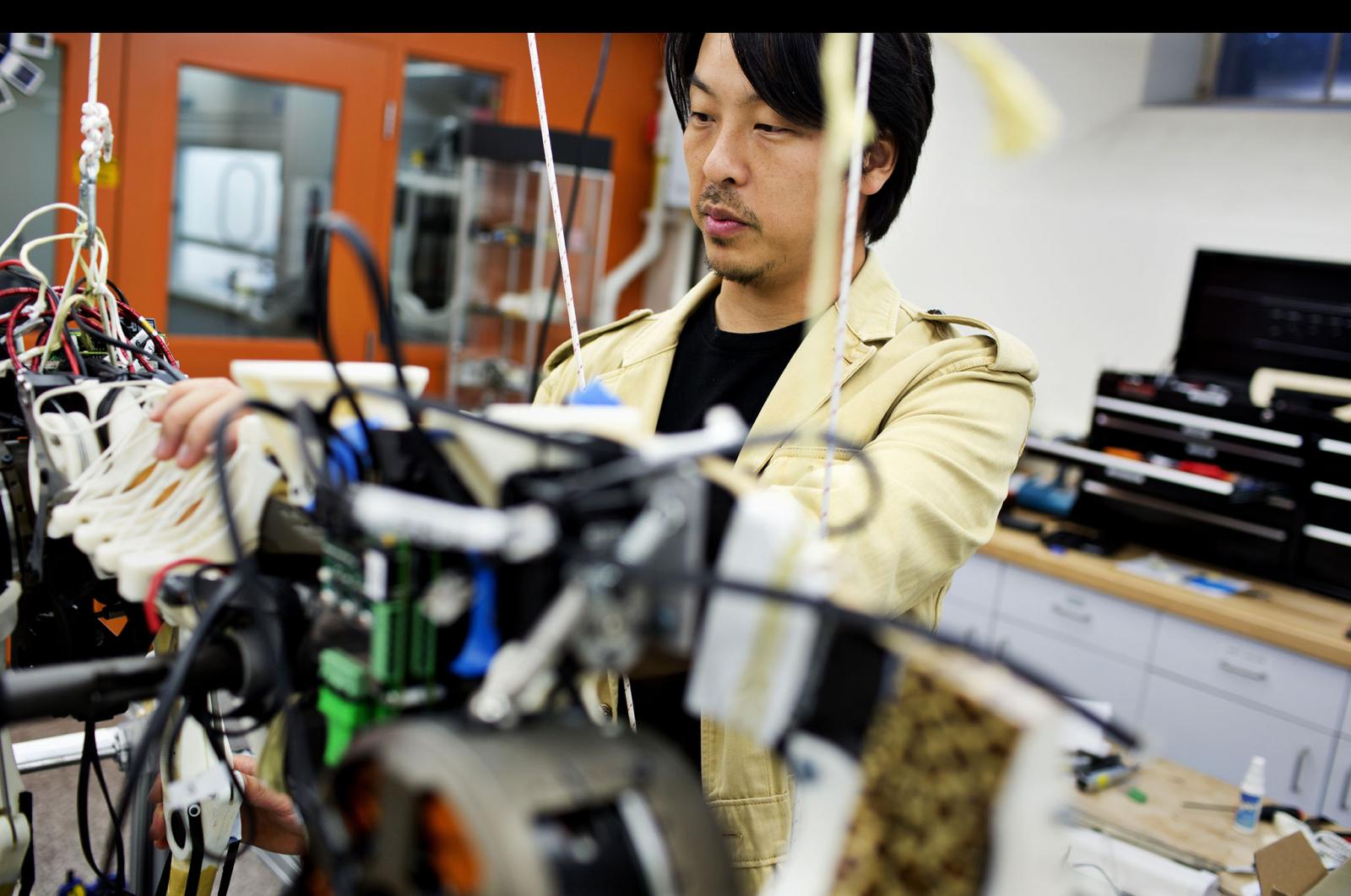
Sangbae Kim
研究方向
- 腿式与人形机器人
- 运动控制
- 残差MPC混合强化学习
- 人形手臂质心动量运动
- GPU并行全身MPC
- 腿式机器人设计
- MIT人形机器人
- 精密对齐测功机
- 反射抓取
- 学习运动
- 去中心相位振荡步态
- 模型与无模型融合运动
- 人形运动基准
- 运动控制
腿式机器人人形机器人模型预测控制强化学习运动控制动态运动
近三年论文 · 32 篇 (点击展开摘要,时间倒序)
Residual MPC: Blending Reinforcement Learning with GPU-Parallelized Model Predictive Control
arXiv (Cornell University) · 2025 · cited 0 · doi.org/10.48550/arxiv.2510.12717
Model Predictive Control (MPC) provides interpretable, tunable locomotion controllers grounded in physical models, but its robustness depends on frequent replanning and is limited by model mismatch and real-time computational constraints. Reinforcement Learning (RL), by contrast, can produce highly robust behaviors through stochastic training but often lacks interpretability, suffers from out-of-distribution failures, and requires intensive reward engineering. This work presents a GPU-parallelized residual architecture that tightly integrates MPC and RL by blending their outputs at the torque-control level. We develop a kinodynamic whole-body MPC formulation evaluated across thousands of agents in parallel at 100 Hz for RL training. The residual policy learns to make targeted corrections to the MPC outputs, combining the interpretability and constraint handling of model-based control with the adaptability of RL. The model-based control prior acts as a strong bias, initializing and guiding the policy towards desirable behavior with a simple set of rewards. Compared to standalone MPC or end-to-end RL, our approach achieves higher sample efficiency, converges to greater asymptotic rewards, expands the range of trackable velocity commands, and enables zero-shot adaptation to unseen gaits and uneven terrain.
Hierarchical Reactive Grasping via Task-Space Velocity Fields and Joint-Space Quadratic Programming
arXiv (Cornell University) · 2025 · cited 0 · doi.org/10.48550/arxiv.2509.01044
We present a fast and reactive grasping framework that combines task-space velocity fields with joint-space Quadratic Program (QP) in a hierarchical structure. Reactive, collision-free global motion planning is particularly challenging for high-DoF systems, as simultaneous increases in state dimensionality and planning horizon trigger a combinatorial explosion of the search space, making real-time planning intractable. To address this, we plan globally in a lower-dimensional task space, such as fingertip positions, and track locally in the full joint space while enforcing all constraints. This approach is realized by constructing velocity fields in multiple task-space coordinates (or, in some cases, a subset of joint coordinates) and solving a weighted joint-space QP to compute joint velocities that track these fields with appropriately assigned priorities. Through simulation experiments and real-world tests using the recent pose-tracking algorithm FoundationPose, we verify that our method enables high-DoF arm-hand systems to perform real-time, collision-free reaching motions while adapting to dynamic environments and external disturbances.
Design and Dynamic Modeling of a Dynamometer With Precision Alignment and High Bandwidth
· 2025 · cited 0 · doi.org/10.1115/detc2025-166141
Abstract Dynamometers are important tools for characterizing motors; however, they often produce inaccurate data due to misalignment between the motor and torque sensor. While typical alignment procedures are time-consuming, this paper proposes a dynamometer design that enables precision alignment with a single assembly. Rigid shaft couplers are used to align the motor with torque sensor, and the adjustable motor mount uses leveling sets and spherical washers to accommodate variability. Linear guides allow the rigid shaft coupler to be replaced with a flexible shaft coupler while maintaining precise alignment. Single-disc flexible shaft couplers were chosen for their linear dynamic behavior and high mechanical bandwidth. The linear guides’ precision was 3.7 times better than the disc coupler misalignment tolerance. The components’ load capacity were analyzed, resulting in safety factors of over 11. Finally, the resonance of the mounts was analyzed, giving a natural frequency 50% higher than the motor control frequency. When experimentally compared to a traditional dynamometer, this design resulted in mean attenuation of misalignment current oscillations of over 80%. When integrated with a motor and brake, the dynamometer had second-order linear dynamic behavior, with the analytically predicted natural frequency having a 5.6% error compared to the measured bandwidth.
Learning Humanoid Arm Motion via Centroidal Momentum Regularized Multi-Agent Reinforcement Learning
arXiv (Cornell University) · 2025 · cited 0
Humans naturally swing their arms during locomotion to regulate whole-body dynamics, reduce angular momentum, and help maintain balance. Inspired by this principle, we present a limb-level multi-agent reinforcement learning (RL) framework that enables coordinated whole-body control of humanoid robots through emergent arm motion. Our approach employs separate actor-critic structures for the arms and legs, trained with centralized critics but decentralized actors that share only base states and centroidal angular momentum (CAM) observations, allowing each agent to specialize in task-relevant behaviors through modular reward design. The arm agent guided by CAM tracking and damping rewards promotes arm motions that reduce overall angular momentum and vertical ground reaction moments, contributing to improved balance during locomotion or under external perturbations. Comparative studies with single-agent and alternative multi-agent baselines further validate the effectiveness of our approach. Finally, we deploy the learned policy on a humanoid platform, achieving robust performance across diverse locomotion tasks, including flat-ground walking, rough terrain traversal, and stair climbing.
Improving Tandem Fluency Through Utilization of Deep Learning to Predict Human Motion in Exoskeleton
Actuators · 2025 · cited 1 · doi.org/10.3390/act14060260
Today’s exoskeletons face challenges with low fluency (a quantifiable alternative to “seamlessness”), hypothesized to be caused by a lag in active control innate in many leader–follower paradigms seen in contemporary systems, leading to inefficiencies and discomfort. Furthermore, tandem fluency, a variation of fluency specific for tandem robots systems as exoskeletons, is yet to be rigorously tested in practice. This study aims to utilize metrics of tandem fluency in order to demonstrate improved human–robot interaction (HRI) in exoskeletons through human subject testing of a prototype 1 degree of freedom (DoF) exoskeleton using a motion prediction bidirectional long short-term memory (bi-LSTM) deep learning network. Subjects were recruited to conduct various upper body exercises about the elbow joint, and the collected sEMG, goniometer, and gas exchange data was used to design, test, optimize, and assess the performance of the 1 DoF exoskeleton using tandem fluency metrics. We found that the correlation between I-ACT, a metric of tandem fluency, the subjective survey responses, and metabolic data suggest that the use of a predictive bi-LSTM network to control a 1 DoF exoskeleton about the elbow results in an overall positive trend, which may correlate to high tandem fluency.
High Speed Robotic Table Tennis Swinging Using Lightweight Hardware with Model Predictive Control
· 2025 · cited 2 · doi.org/10.1109/icra55743.2025.11127907
We present a robotic table tennis platform that achieves a variety of hit styles and ball-spins with high precision, power, and consistency. This is enabled by a custom lightweight, high-torque, low rotor inertia, five degree-of-freedom arm capable of high acceleration. To generate swing trajectories, we formulate an optimal control problem (OCP) that constrains the state of the paddle at the time of the strike. The terminal position is given by a predicted ball trajectory, and the terminal orientation and velocity of the paddle are chosen to match various possible styles of hits: loops (topspin), drives (flat), and chops (backspin). Finally, we construct a fixed-horizon model predictive controller (MPC) around this OCP to allow the hardware to quickly react to changes in the predicted ball trajectory. We validate on hardware that the system is capable of hitting balls with an average exit velocity of <tex xmlns:mml="http://www.w3.org/1998/Math/MathML" xmlns:xlink="http://www.w3.org/1999/xlink">$11 \mathrm{m} / \mathrm{s}$</tex> at an 88% success rate across the three swing types.
High Speed Robotic Table Tennis Swinging Using Lightweight Hardware with Model Predictive Control
arXiv (Cornell University) · 2025 · cited 0 · doi.org/10.48550/arxiv.2505.01617
We present a robotic table tennis platform that achieves a variety of hit styles and ball-spins with high precision, power, and consistency. This is enabled by a custom lightweight, high-torque, low rotor inertia, five degree-of-freedom arm capable of high acceleration. To generate swing trajectories, we formulate an optimal control problem (OCP) that constrains the state of the paddle at the time of the strike. The terminal position is given by a predicted ball trajectory, and the terminal orientation and velocity of the paddle are chosen to match various possible styles of hits: loops (topspin), drives (flat), and chops (backspin). Finally, we construct a fixed-horizon model predictive controller (MPC) around this OCP to allow the hardware to quickly react to changes in the predicted ball trajectory. We validate on hardware that the system is capable of hitting balls with an average exit velocity of 11 m/s at an 88% success rate across the three swing types.
A Propagation Perspective on Recursive Forward Dynamics for Systems With Kinematic Loops
IEEE Transactions on Robotics · 2025 · cited 0 · doi.org/10.1109/tro.2025.3593081
We revisit the concept of constraint embedding as a means for dealing with kinematic loop constraints during dynamics computations for rigid-body systems. Specifically, we consider the local loop constraints emerging from common actuation sub-mechanisms in modern robotics systems (e.g., geared motors, differential drives, and four-bar mechanisms). As a complementary perspective to prior work on constraint embedding, we present an analysis that generalizes the traditional concepts of joint models and motion/force subspaces between individual rigid bodies to generalized joint models and motion/force subspaces between groups of rigid bodies subject to loop constraints. We then use these generalized concepts to derive the constraint-embedded recursive forward dynamics algorithm using multi-handle articulated bodies. We demonstrate the broad applicability of the generalized joint concepts by showing how they also lead to the constraint-embedding-based recursive algorithm for inverse dynamics. Lastly, we benchmark our open-source implementation in C++ for the forward dynamics algorithm against state-of-the-art, sparsity-exploiting algorithms. Our alternative derivation is intended to make the constraint embedding methodology more accessible to the broader robotics community, while the benchmarking study clarifies the relative strengths and limitations of constraint embedding versus sparsity-exploiting methods. Indeed, our benchmarking validates that constraint embedding outperforms the non-recursive alternative in cases involving local kinematic loops.
CusADi: A GPU Parallelization Framework for Symbolic Expressions and Optimal Control
IEEE Robotics and Automation Letters · 2024 · cited 7 · doi.org/10.1109/lra.2024.3512254
The parallelism afforded by GPUs presents significant advantages in training controllers through reinforcement learning (RL). However, integrating model-based optimization into this process remains challenging due to the complexity of formulating and solving optimization problems across thousands of instances. In this work, we present <monospace xmlns:mml="http://www.w3.org/1998/Math/MathML" xmlns:xlink="http://www.w3.org/1999/xlink">CusADi</monospace>, an extension of the <monospace xmlns:mml="http://www.w3.org/1998/Math/MathML" xmlns:xlink="http://www.w3.org/1999/xlink">casadi</monospace> symbolic framework to support the parallelization of arbitrary closed-form expressions on GPUs with <monospace xmlns:mml="http://www.w3.org/1998/Math/MathML" xmlns:xlink="http://www.w3.org/1999/xlink">CUDA</monospace>. We also formulate a closed-form approximation for solving general optimal control problems, enabling large-scale parallelization and evaluation of MPC controllers. Our results show a ten-fold speedup relative to similar MPC implementation on the CPU, and we demonstrate the use of <monospace xmlns:mml="http://www.w3.org/1998/Math/MathML" xmlns:xlink="http://www.w3.org/1999/xlink">CusADi</monospace> for various applications, including parallel simulation, parameter sweeps, and policy training.
URDF+: An Enhanced URDF for Robots with Kinematic Loops
arXiv (Cornell University) · 2024 · cited 0 · doi.org/10.48550/arxiv.2411.19753
Designs incorporating kinematic loops are becoming increasingly prevalent in the robotics community. Despite the existence of dynamics algorithms to deal with the effects of such loops, many modern simulators rely on dynamics libraries that require robots to be represented as kinematic trees. This requirement is reflected in the de facto standard format for describing robots, the Universal Robot Description Format (URDF), which does not support kinematic loops resulting in closed chains. This paper introduces an enhanced URDF, termed URDF+, which addresses this key shortcoming of URDF while retaining the intuitive design philosophy and low barrier to entry that the robotics community values. The URDF+ keeps the elements used by URDF to describe open chains and incorporates new elements to encode loop joints. We also offer an accompanying parser that processes the system models coming from URDF+ so that they can be used with recursive rigid-body dynamics algorithms for closed-chain systems that group bodies into local, decoupled loops. This parsing process is fully automated, ensuring optimal grouping of constrained bodies without requiring manual specification from the user. We aim to advance the robotics community towards this elegant solution by developing efficient and easy-to-use software tools.
URDF+: An Enhanced URDF for Robots with Kinematic Loops
· 2024 · cited 7 · doi.org/10.1109/humanoids58906.2024.10769903
Designs incorporating kinematic loops are becoming increasingly prevalent in the robotics community. Despite the existence of dynamics algorithms to deal with the effects of such loops, many modern simulators rely on dynamics libraries that require robots to be represented as kinematic trees. This requirement is reflected in the de facto standard format for describing robots, the Universal Robot Description Format (URDF), which does not support kinematic loops resulting in closed chains. This paper introduces an enhanced URDF, termed URDF+, which addresses this key shortcoming of URDF while retaining the intuitive design philosophy and low barrier to entry that the robotics community values. The URDF+ keeps the elements used by URDF to describe open chains and incorporates new elements to encode loop joints. We also offer an accompanying parser that processes the system models coming from URDF+ so that they can be used with recursive rigid-body dynamics algorithms for closed-chain systems that group bodies into local, decoupled loops. This parsing process is fully automated, ensuring optimal grouping of constrained bodies without requiring manual specification from the user. We aim to advance the robotics community towards this elegant solution by developing efficient and easy-to-use software tools.
Integrating Model-Based Footstep Planning with Model-Free Reinforcement Learning for Dynamic Legged Locomotion
· 2024 · cited 16 · doi.org/10.1109/iros58592.2024.10801468
In this work, we introduce a control framework that combines model-based footstep planning with Reinforcement Learning (RL), leveraging desired footstep patterns derived from the Linear Inverted Pendulum (LIP) dynamics. Utilizing the LIP model, our method forward predicts robot states and determines the desired foot placement given the velocity commands. We then train an RL policy to track the foot placements without following the full reference motions derived from the LIP model. This partial guidance from the physics model allows the RL policy to integrate the predictive capabilities of the physics-informed dynamics and the adaptability characteristics of the RL controller without overfitting the policy to the template model. Our approach is validated on the MIT Humanoid, demonstrating that our policy can achieve stable yet dynamic locomotion for walking and turning. We further validate the adaptability and generalizability of our policy by extending the locomotion task to unseen, uneven terrain. During the hardware deployment, we have achieved forward walking speeds of up to 1.5 m/s on a treadmill and have successfully performed dynamic locomotion maneuvers such as 90-degree and 180-degree turns.
Probabilistic Homotopy Optimization for Dynamic Motion Planning
· 2024 · cited 3 · doi.org/10.1109/iros58592.2024.10802528
We present a homotopic approach to solving challenging, optimization-based motion planning problems. The approach uses Homotopy Optimization, which, unlike standard continuation methods for solving homotopy problems, solves a sequence of constrained optimization problems rather than a sequence of nonlinear systems of equations. The insight behind our proposed algorithm is formulating the discovery of this sequence of optimization problems as a search problem in a multidimensional homotopy parameter space. Our proposed algorithm, the Probabilistic Homotopy Optimization algorithm, switches between solve and sample phases, using solutions to easy problems as initial guesses to more challenging problems. We analyze how our algorithm performs in the presence of common challenges to homotopy methods, such as bifurcation, folding, and disconnectedness of the homotopy solution manifold. Finally, we demonstrate its utility via a case study on two dynamic motion planning problems. the cart-pole and the MIT Humanoid.
Tailoring Solution Accuracy for Fast Whole-Body Model Predictive Control of Legged Robots
IEEE Robotics and Automation Letters · 2024 · cited 40 · doi.org/10.1109/lra.2024.3455907
Thanks to recent advancements in accelerating non-linear model predictive control (NMPC), it is now feasible to deploy whole-body NMPC at real-time rates for humanoid robots. However, enforcing inequality constraints in real time for such high-dimensional systems remains challenging due to the need for additional iterations. This letter presents an implementation of whole-body NMPC for legged robots that provides low-accuracy solutions to NMPC with general equality and inequality constraints. Instead of aiming for highly accurate optimal solutions, we leverage the alternating direction method of multipliers to rapidly provide low-accuracy solutions to quadratic programming subproblems. Our extensive simulation results indicate that real robots often cannot benefit from highly accurate solutions due to dynamics discretization errors, inertial modeling errors and delays. We incorporate control barrier functions (CBFs) at the initial timestep of the NMPC for the self-collision constraints, resulting in up to a 26-fold reduction in the number of self-collisions without adding computational burden. The controller is reliably deployed on hardware at 90 Hz for a problem involving 32 timesteps, 2004 variables, and 3768 constraints. The NMPC delivers sufficiently accurate solutions, enabling the MIT Humanoid to plan complex crossed-leg and arm motions that enhance stability when walking and recovering from significant disturbances.
Probabilistic Homotopy Optimization for Dynamic Motion Planning
arXiv (Cornell University) · 2024 · cited 0 · doi.org/10.48550/arxiv.2408.12490
We present a homotopic approach to solving challenging, optimization-based motion planning problems. The approach uses Homotopy Optimization, which, unlike standard continuation methods for solving homotopy problems, solves a sequence of constrained optimization problems rather than a sequence of nonlinear systems of equations. The insight behind our proposed algorithm is formulating the discovery of this sequence of optimization problems as a search problem in a multidimensional homotopy parameter space. Our proposed algorithm, the Probabilistic Homotopy Optimization algorithm, switches between solve and sample phases, using solutions to easy problems as initial guesses to more challenging problems. We analyze how our algorithm performs in the presence of common challenges to homotopy methods, such as bifurcation, folding, and disconnectedness of the homotopy solution manifold. Finally, we demonstrate its utility via a case study on two dynamic motion planning problems: the cart-pole and the MIT Humanoid.
CusADi: A GPU Parallelization Framework for Symbolic Expressions and Optimal Control
arXiv (Cornell University) · 2024 · cited 0 · doi.org/10.48550/arxiv.2408.09662
The parallelism afforded by GPUs presents significant advantages in training controllers through reinforcement learning (RL). However, integrating model-based optimization into this process remains challenging due to the complexity of formulating and solving optimization problems across thousands of instances. In this work, we present CusADi, an extension of the CasADi symbolic framework to support the parallelization of arbitrary closed-form expressions on GPUs with CUDA. We also formulate a closed-form approximation for solving general optimal control problems, enabling large-scale parallelization and evaluation of MPC controllers. Our results show a ten-fold speedup relative to similar MPC implementation on the CPU, and we demonstrate the use of CusADi for various applications, including parallel simulation, parameter sweeps, and policy training.
Integrating Model-Based Footstep Planning with Model-Free Reinforcement Learning for Dynamic Legged Locomotion
arXiv (Cornell University) · 2024 · cited 0 · doi.org/10.48550/arxiv.2408.02662
In this work, we introduce a control framework that combines model-based footstep planning with Reinforcement Learning (RL), leveraging desired footstep patterns derived from the Linear Inverted Pendulum (LIP) dynamics. Utilizing the LIP model, our method forward predicts robot states and determines the desired foot placement given the velocity commands. We then train an RL policy to track the foot placements without following the full reference motions derived from the LIP model. This partial guidance from the physics model allows the RL policy to integrate the predictive capabilities of the physics-informed dynamics and the adaptability characteristics of the RL controller without overfitting the policy to the template model. Our approach is validated on the MIT Humanoid, demonstrating that our policy can achieve stable yet dynamic locomotion for walking and turning. We further validate the adaptability and generalizability of our policy by extending the locomotion task to unseen, uneven terrain. During the hardware deployment, we have achieved forward walking speeds of up to 1.5 m/s on a treadmill and have successfully performed dynamic locomotion maneuvers such as 90-degree and 180-degree turns.
Tailoring Solution Accuracy for Fast Whole-body Model Predictive Control of Legged Robots
arXiv (Cornell University) · 2024 · cited 1 · doi.org/10.48550/arxiv.2407.10789
Thanks to recent advancements in accelerating non-linear model predictive control (NMPC), it is now feasible to deploy whole-body NMPC at real-time rates for humanoid robots. However, enforcing inequality constraints in real time for such high-dimensional systems remains challenging due to the need for additional iterations. This paper presents an implementation of whole-body NMPC for legged robots that provides low-accuracy solutions to NMPC with general equality and inequality constraints. Instead of aiming for highly accurate optimal solutions, we leverage the alternating direction method of multipliers to rapidly provide low-accuracy solutions to quadratic programming subproblems. Our extensive simulation results indicate that real robots often cannot benefit from highly accurate solutions due to dynamics discretization errors, inertial modeling errors and delays. We incorporate control barrier functions (CBFs) at the initial timestep of the NMPC for the self-collision constraints, resulting in up to a 26-fold reduction in the number of self-collisions without adding computational burden. The controller is reliably deployed on hardware at 90 Hz for a problem involving 32 timesteps, 2004 variables, and 3768 constraints. The NMPC delivers sufficiently accurate solutions, enabling the MIT Humanoid to plan complex crossed-leg and arm motions that enhance stability when walking and recovering from significant disturbances.
Learning Emergent Gaits with Decentralized Phase Oscillators: on the role of Observations, Rewards, and Feedback
· 2024 · cited 4 · doi.org/10.1109/icra57147.2024.10611045
We present a minimal phase oscillator model for learning quadrupedal locomotion. Each of the four oscillators is coupled only to itself and its corresponding leg through local feedback of the ground reaction force, which can be interpreted as an observer feedback gain. We interpret the oscillator itself as a latent contact state-estimator. Through a systematic ablation study, we show that the combination of phase observations, simple phase-based rewards, and the local feedback dynamics induces policies that exhibit emergent gait preferences, while using a reduced set of simple rewards, and without prescribing a specific gait. The code is open-source, and a video synopsis available at https://youtu.be/1NKQ0rSV3jU.
Learning Quadruped Locomotion Using Differentiable Simulation
arXiv (Cornell University) · 2024 · cited 1 · doi.org/10.48550/arxiv.2403.14864
This work explores the potential of using differentiable simulation for learning quadruped locomotion. Differentiable simulation promises fast convergence and stable training by computing low-variance first-order gradients using robot dynamics. However, its usage for legged robots is still limited to simulation. The main challenge lies in the complex optimization landscape of robotic tasks due to discontinuous dynamics. This work proposes a new differentiable simulation framework to overcome these challenges. Our approach combines a high-fidelity, non-differentiable simulator for forward dynamics with a simplified surrogate model for gradient backpropagation. This approach maintains simulation accuracy by aligning the robot states from the surrogate model with those of the precise, non-differentiable simulator. Our framework enables learning quadruped walking in simulation in minutes without parallelization. When augmented with GPU parallelization, our approach allows the quadruped robot to master diverse locomotion skills on challenging terrains in minutes. We demonstrate that differentiable simulation outperforms a reinforcement learning algorithm (PPO) by achieving significantly better sample efficiency while maintaining its effectiveness in handling large-scale environments. Our method represents one of the first successful applications of differentiable simulation to real-world quadruped locomotion, offering a compelling alternative to traditional RL methods.
FLD: Fourier Latent Dynamics for Structured Motion Representation and Learning
arXiv (Cornell University) · 2024 · cited 1 · doi.org/10.48550/arxiv.2402.13820
Motion trajectories offer reliable references for physics-based motion learning but suffer from sparsity, particularly in regions that lack sufficient data coverage. To address this challenge, we introduce a self-supervised, structured representation and generation method that extracts spatial-temporal relationships in periodic or quasi-periodic motions. The motion dynamics in a continuously parameterized latent space enable our method to enhance the interpolation and generalization capabilities of motion learning algorithms. The motion learning controller, informed by the motion parameterization, operates online tracking of a wide range of motions, including targets unseen during training. With a fallback mechanism, the controller dynamically adapts its tracking strategy and automatically resorts to safe action execution when a potentially risky target is proposed. By leveraging the identified spatial-temporal structure, our work opens new possibilities for future advancements in general motion representation and learning algorithms.
Learning Emergent Gaits with Decentralized Phase Oscillators: on the role of Observations, Rewards, and Feedback
arXiv (Cornell University) · 2024 · cited 0 · doi.org/10.48550/arxiv.2402.08662
We present a minimal phase oscillator model for learning quadrupedal locomotion. Each of the four oscillators is coupled only to itself and its corresponding leg through local feedback of the ground reaction force, which can be interpreted as an observer feedback gain. We interpret the oscillator itself as a latent contact state-estimator. Through a systematic ablation study, we show that the combination of phase observations, simple phase-based rewards, and the local feedback dynamics induces policies that exhibit emergent gait preferences, while using a reduced set of simple rewards, and without prescribing a specific gait. The code is open-source, and a video synopsis available at https://youtu.be/1NKQ0rSV3jU.
Design and Development of the MIT Humanoid: A Dynamic and Robust Research Platform
· 2023 · cited 21 · doi.org/10.1109/humanoids57100.2023.10375199
Enabling humanoid robots to achieve human-level athletic feats, such as running and jumping, is at the frontier of robotics research. To execute these behaviors, a robot platform must have high power density and robust mechanical and electrical systems. In this paper, we present the MIT Humanoid, a robust research platform that is designed to meet these requirements and be able to perform highly dynamic, parkour-style motions. The robot is just over 1 m tall and weighs approximately 24 kg, with 18 actuated degrees of freedom, each of which has a custom high-torque proprioceptive motor module. We also present initial hardware results from our new platform, demonstrating model-based controllers for pose control, walking, and jumping. The robot's high control bandwidth allows us to achieve stable pose control and walking, and the high power density allows the robot to achieve vertical jumps of roughly 30 cm, as measured by torso displacement.
Improving Domain Transfer of Robot Dynamics Models with Geometric System Identification and Learned Friction Compensation
· 2023 · cited 1 · doi.org/10.1109/humanoids57100.2023.10375233
Dynamic simulation is an important part of the design pipeline for robot controllers, but there is often a significant performance gap between the simulation domain and the real world. This sim-to-real gap makes transferring controllers developed in one simulation environment to other simulations or to real hardware systems difficult and time-consuming. Here, we introduce an approach to reduce this gap for the MIT Humanoid by using physically-feasible system identification methods to match dynamics models across domains, combined with neural networks to model any residual dynamics, such as friction. Using data from our real hardware system as the ground truth, we develop models for transfer from two separate simulation environments to hardware, as well as transfer between the two simulations. Finally, we show experimental results using our fitted dynamic models and characterize our domain transfer success.
A Propagation Perspective on Recursive Forward Dynamics for Systems with Kinematic Loops
arXiv (Cornell University) · 2023 · cited 0 · doi.org/10.48550/arxiv.2311.13732
We revisit the concept of constraint embedding as a means for dealing with kinematic loop constraints during dynamics computations for rigid-body systems. Specifically, we consider the local loop constraints emerging from common actuation sub-mechanisms in modern robotics systems (e.g., geared motors, differential drives, and four-bar mechanisms). However, rather than develop the concept of constraint embedding from the perspective of graphical analysis, we present a novel analysis of constraint embedding that generalizes the traditional concepts of joint models and motion/force subspaces between individual rigid bodies to generalized joint models and motion/force subspaces between groups of rigid bodies subject to loop constraints. The generalized concepts are used in a self-contained, articulated-body-based derivation of the constraint-embedding-based recursive algorithm for forward dynamics. The derivation represents the first assembly method to demonstrate the recursivity of articulated inertia computation in the presence of loop constraints. We demonstrate the broad applicability of the generalized joint concepts by showing how they also lead to the constraint-embedding-based recursive algorithm for inverse dynamics. Lastly, we benchmark our open-source implementation in C++ for the forward dynamics algorithm against a state-of-the-art, non-recursive algorithm. Our benchmarking validates that constraint embedding outperforms the non-recursive alternative in the case of local kinematic loops.
Benchmarking Potential Based Rewards for Learning Humanoid Locomotion
· 2023 · cited 21 · doi.org/10.1109/icra48891.2023.10160885
The main challenge in developing effective reinforcement learning (RL) pipelines is often the design and tuning the reward functions. Well-designed shaping reward can lead to significantly faster learning. Naively formulated rewards, however, can conflict with the desired behavior and result in overfitting or even erratic performance if not properly tuned. In theory, the broad class of potential based reward shaping (PBRS) can help guide the learning process without affecting the optimal policy. Although several studies have explored the use of potential based reward shaping to accelerate learning convergence, most have been limited to grid-worlds and low-dimensional systems, and RL in robotics has predominantly relied on standard forms of reward shaping. In this paper, we benchmark standard forms of shaping with PBRS for a humanoid robot. We find that in this high-dimensional system, PBRS has only marginal benefits in convergence speed. However, the PBRS reward terms are significantly more robust to scaling than typical reward shaping approaches, and thus easier to tune.
Towards Robust Autonomous Grasping with Reflexes Using High-Bandwidth Sensing and Actuation
· 2023 · cited 7 · doi.org/10.1109/icra48891.2023.10160930
Modern robotic manipulation systems fall short of human manipulation skills partly because they rely on closing feedback loops exclusively around vision data, which reduces system bandwidth and speed. By developing autonomous grasping reflexes that rely on high-bandwidth force, contact, and proximity data, the overall system speed and robustness can be increased while reducing reliance on vision data. We are developing a new system built around a low-inertia, high-speed arm with nimble fingers that combines a high-level trajectory planner operating at less than 1 Hz with low-level autonomous reflex controllers running upwards of 300 Hz. We characterize the reflex system by comparing the volume of the set of successful grasps for a naive baseline controller and variations of our reflexive grasping controller, finding that our controller expands the set of successful grasps by 55% relative to the baseline. We also deploy our reflexive grasping controller with a simple vision-based planner in an autonomous clutter clearing task, achieving a grasp success rate above 90% while clearing over 100 items.
Design of a Multimodal Fingertip Sensor for Dynamic Manipulation
· 2023 · cited 8 · doi.org/10.1109/icra48891.2023.10160256
We introduce a spherical fingertip sensor for dynamic manipulation. It is based on barometric pressure and time-of-flight proximity sensors and is low-latency, compact, and physically robust. The sensor uses a trained neural network to estimate the contact location and three-axis contact forces based on data from the pressure sensors, which are embedded within the sensor's sphere of polyurethane rubber. The time-of-flight sensors face in three different outward directions, and an integrated microcontroller samples each of the individual sensors at up to 200 Hz. To quantify the effect of system latency on dynamic manipulation performance, we develop and analyze a metric called the collision impulse ratio and characterize the end-to-end latency of our new sensor. We also present experimental demonstrations with the sensor, including measuring contact transitions, performing coarse mapping, maintaining a contact force with a moving object, and reacting to avoid collisions.
Optimal Scheduling of Models and Horizons for Model Hierarchy Predictive Control
· 2023 · cited 3 · doi.org/10.1109/icra48891.2023.10160528
Model predictive control (MPC) is a powerful tool to control systems with non-linear dynamics and constraints, but its computational demands impose limitations on the dynamics model used for planning. Instead of using a single complex model along the MPC horizon, model hierarchy predictive control (MHPC) reduces solve times by planning over a sequence of models of varying complexity within a single horizon. Choosing this model sequence can become intractable when considering all possible combinations of reduced order models and prediction horizons. We propose a framework to systematically optimize a model schedule for MHPC. We leverage trajectory optimization (TO) to approximate the accumulated cost of the closed-loop controller. We trade off performance and solve times by minimizing the number of decision variables of the MHPC problem along the horizon while keeping the approximate closed-loop cost near optimal. The framework is validated in simulation with a planar humanoid robot as a proof of concept. We find that the approximated closed-loop cost matches the simulated one for most of the model schedules, and show that the proposed approach finds optimal model schedules that transfer directly to simulation, and with total horizons that vary between 1.1 and 1.6 walking steps.
Reinforcement Learning for Legged Robots: Motion Imitation from Model-Based Optimal Control
arXiv (Cornell University) · 2023 · cited 2 · doi.org/10.48550/arxiv.2305.10989
We propose MIMOC: Motion Imitation from Model-Based Optimal Control. MIMOC is a Reinforcement Learning (RL) controller that learns agile locomotion by imitating reference trajectories from model-based optimal control. MIMOC mitigates challenges faced by other motion imitation RL approaches because the references are dynamically consistent, require no motion retargeting, and include torque references. Hence, MIMOC does not require fine-tuning. MIMOC is also less sensitive to modeling and state estimation inaccuracies than model-based controllers. We validate MIMOC on the Mini-Cheetah in outdoor environments over a wide variety of challenging terrain, and on the MIT Humanoid in simulation. We show cases where MIMOC outperforms model-based optimal controllers, and show that imitating torque references improves the policy's performance.
WORMS: Field-Reconfigurable Robots for Extreme Lunar Terrain
· 2023 · cited 10 · doi.org/10.1109/aero55745.2023.10115833
The 2022 NASA BIG Idea Challenge invited teams to develop novel extreme lunar terrain mobility technologies in support of the Artemis program, setting only the constraint to not propose a wheeled robot. This paper proposes a platform for field-reconfigurable walking robots that can be tailored to multiple missions and even repaired in the field. Design exploration started with listing potential missions for walking robots, and took inspiration from animals to conceptualize four different locomotion strategies and associated novel robot forms. We then synthesized all ideas into our field-reconfigurable robot platform architecture, the Walking Oligomeric Robotic Mobility System (WORMS). The elements of WORMS include identical articulating Worm robots, simple Accessories, such as shoes and chassis or pallets, as well as more sophisticated Species Modules (such as the ‘Mapper’). With a variety of elements in hand, different animal-like robots can be rapidly assembled and dispatched to support many different mission profiles. Specialization of function is accomplished using a variety of modular Accessories and Species Modules, such as different shoes, an anchoring drill, or a winch-and-cable. Each known robot configuration requires only the needed hardware elements plus software, meaning that new robots can be transmitted to the Moon. The system is designed for ease of assembly, operations and maintenance by non-specialists. In our WORMS-1 proof of concept which is presented here, six Worms with large Apollo-like shoes serve as legs to traverse high-porosity and steeply inclined terrain in order to set up a charging and radio relay station for other rovers inside permanently shadowed regions. Different robot configurations, working alone or in swarms, could traverse other terrain types and perform different missions. WORMS is enabled by three key technologies: (1) the Worm robot itself; (2) the universal interface block (UIB) which is a common mating adapter for all mechanical, electrical and data connections between Worms, Accessories and Species Modules and (3) the ability to safely share electrical power between Worms. In the paper, we present the architecture, trade studies, test results and path-to-flight considerations to evolve the as-built proof of concept WORMS-1 from its current Technology Readiness Level (TRL) 4 into a future TRL 6 design. We also describe the methods and lessons learned from our step-by-step architecting process, which included brainstorming, concept generation and concept fusion into a versatile platform design. We propose that WORMS is a resilient, easily maintainable, low-cost, evolvable, flexible, future-proof and modular architecture for the rapid field assembly of robots to support extreme terrain access and lunar infrastructure development. WORMS can therefore support many of the needs of NASA and its commercial and industrial partners throughout the Artemis program and on to Mars and beyond.
Tunable Impact and Vibration Absorbing Neck for Robust Visual-Inertial State Estimation for Dynamic Legged Robots
IEEE Robotics and Automation Letters · 2023 · cited 6 · doi.org/10.1109/lra.2023.3240369
We propose a new neck design for legged robots to achieve robust visual-inertial state estimation in dynamic locomotion. While visual-inertial state estimation is widely used in robotics, it has a problem of being disturbed by the impacts and vibration generated when legged robots move dynamically. The use of rubber dampers may be a solution, but even if the dampers are proper for some gaits, they may be excessively deformed or resonated at certain frequencies during other gait locomotion since they are not tunable. To address this problem, we develop a tunable neck system that absorbs the impacts and vibration during diverse gait locomotions. This neck system consists of two components: 1) a suspension mechanism that compensates for the weight of the head equipped with a camera and IMU (inertial measurement unit), absorbs the impacts and the head motion of high frequencies including vibration as a fixed low-pass filter; and 2) a dynamic vibration absorber (DVA) that can be reactively-adjusted to diverse gait frequencies to alleviate excessive head movements. We present a dynamics analysis of the neck system and show how to adjust the target frequency of the system. Simulation and experimental validation are performed to verify the effect of the proposed neck design, manifesting superior estimation performance and robustness across diverse gaits.