← 返回 Community
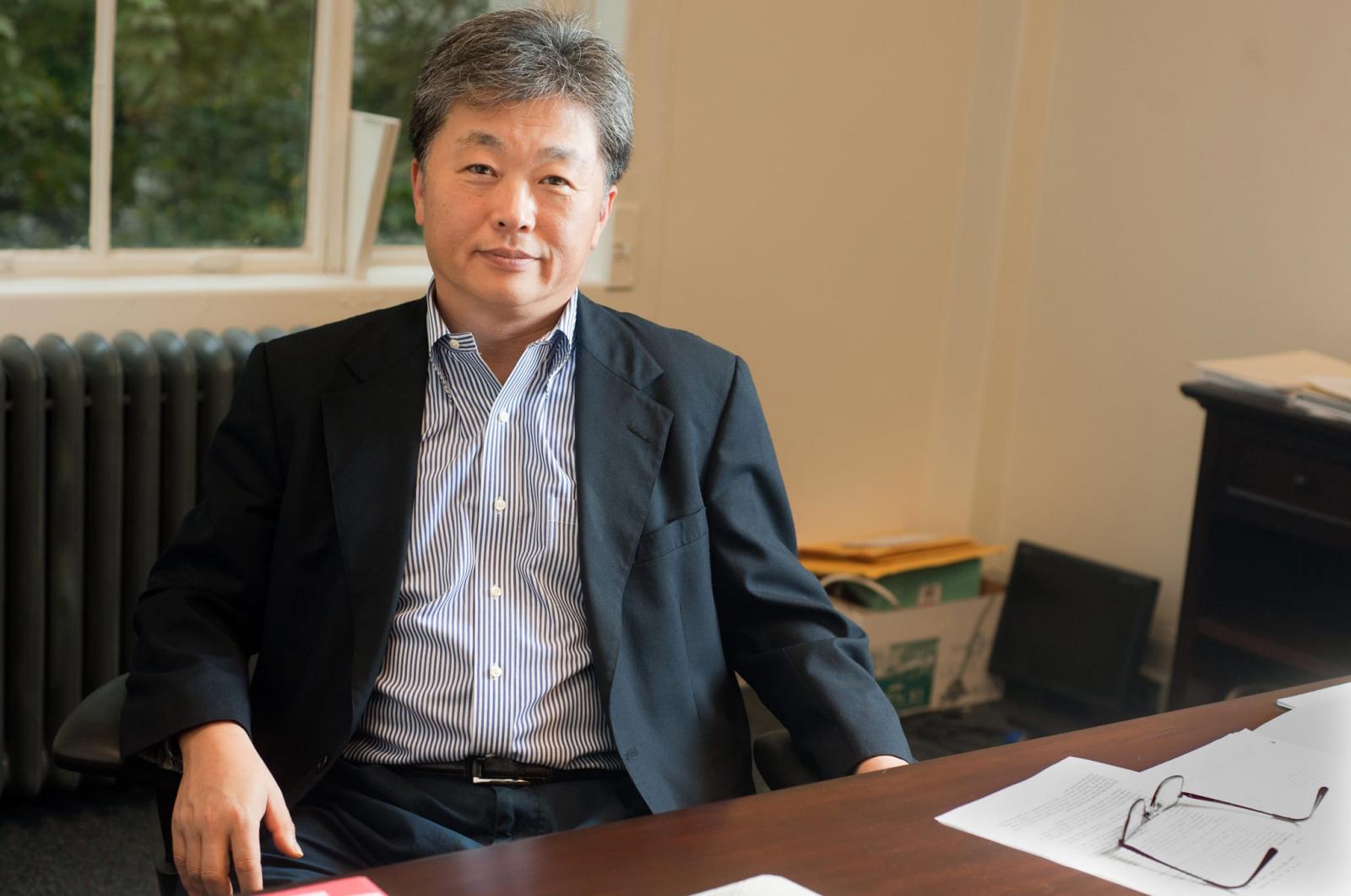
Sang-Gook Kim
研究方向
- 数字制造与生产控制
- 数字线程
- 推挽数字线程
- 制造系统数字转型
- 生产控制
- LLM应急管理生产
- 矩阵生产扰动管理数字孪生
- 数字线程
数字制造数字线程生产控制LLM数字孪生
近三年论文 · 3 篇 (点击展开摘要,时间倒序)
Agentic LLM-based Contingency Management in Production Control
Procedia CIRP · 2026 · cited 2 · doi.org/10.1016/j.procir.2025.08.195
With the rapid rise of Large Language Models capable of representing intricate multi-modal data, decision-makers facing contingencies can be contextually supported with real-time data, dynamic simulations and actionable knowledge insights. This can address critical challenges in production planning and control, particularly in managing stochastic, unforeseen or uninformed changes, i.e. during contingencies. A framework of localized LLM agents for a specific manufacturing environment and system is used to collect past and current decision reasonings, sensory and simulation data to propose contingency management reactions. This concept is implemented within a small-scale semiconductor manufacturing system, demonstrating a unique opportunity for the successful digital transformation of production planning and control.
Generative AI-Driven Disruption Management in Matrix Production: A Digital Twin-Based Framework for Resilient Operations Towards Industry 5.0
· 2025 · cited 1 · doi.org/10.1115/imece2025-167119
Abstract The increasing uncertainty in modern manufacturing systems presents challenges in managing disruptions. Unlike traditional linear production systems, matrix production enables modular flexibility, allowing for real-time machine rescheduling and dynamic material transport via Automated Guided Vehicles (AGVs). However, this added flexibility also introduces substantial complexity in decision-making, particularly under disruption scenarios, as it necessitates the simultaneous adjustment of both AGV dispatching and machine scheduling. Traditional optimization- and rule-based approaches to disruption management often suffer from extended decision-making times, suboptimal performance, and, critically, the limited integration of human expertise. To address these limitations, we propose a Generative AI (GenAI)-driven decision support framework that integrates Large Language Models (LLMs) within matrix production systems to enhance manufacturing resilience. Our framework leverages a fine-tuned GenAI model trained on structured knowledge bases derived from digital twin-enabled what-if disruption scenarios and expert knowledge. By integrating human-guided decision refinement, the framework provides real-time, human-in-the-loop, and explainable decision support aligned with operational goals and human preferences. To validate the approach, we implemented the framework in a semiconductor production use case and assessed the system resilience via key metrics such as utilization, downtime, and throughput. Compared to the best baseline static rule, our GenAI-based framework improved throughput by 11.81% and machine utilization by 11.49% in disruption scenarios. The results show that task-specific recommendations generated by the GenAI model effectively assist workers in selecting optimal response decisions during real-time disruptions.
Push-pull digital thread for digital transformation of manufacturing systems
CIRP Annals · 2023 · cited 18 · doi.org/10.1016/j.cirp.2023.03.023