← 返回 Community
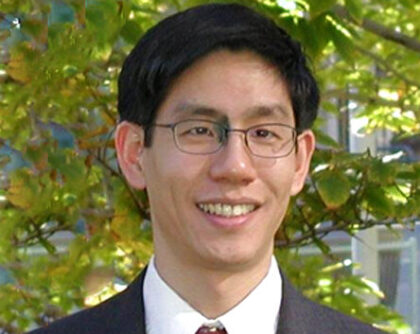
Isaac L. Chuang
研究方向
- 量子计算与量子算法
- 量子算法
- 量子信号处理
- 实时动力学模拟
- 量子哈密顿主动学习
- 囚禁离子
- 亚稳态量子比特存储
- 离子光子纠缠
- 量子信道判别
- 超导量子架构
- 多节点超导量子架构
- 异构量子微架构
- 振子-比特混合处理器
- 量子算法
量子算法量子信号处理囚禁离子量子比特存储量子架构量子计算
近三年论文 · 71 篇 (点击展开摘要,时间倒序)
An efficient probabilistic hardware architecture for diffusion-like models
npj Unconventional Computing · 2026 · cited 0 · doi.org/10.1038/s44335-026-00075-3
Abstract The proliferation of probabilistic AI has prompted proposals for specialized stochastic computers. Despite promising efficiency gains, these proposals have failed to gain traction because they rely on fundamentally limited modeling techniques and exotic, unscalable hardware. In this work, we address these shortcomings by proposing an all-transistor probabilistic computer that implements powerful denoising models at the hardware level. A system-level analysis indicates that devices based on our architecture could achieve performance parity with GPUs on a simple image benchmark using ~10,000 times less energy.
Machine Learning Decoding of Circuit-Level Noise for Bivariate Bicycle Codes
Quantum · 2026 · cited 0 · doi.org/10.22331/q-2026-06-30-2149
Fault-tolerant quantum computers will depend crucially on the performance of the classical decoding algorithm which takes in the results of measurements and outputs corrections to the errors inferred to have occurred. Machine learning models have shown great promise as decoders for the surface code; however, this promise has not yet been substantiated for the more challenging task of decoding quantum low-density parity-check (QLDPC) codes. In this paper, we present a recurrent, transformer-based neural network designed to decode circuit-level noise on Bivariate Bicycle (BB) codes. For the <mml:math xmlns:mml="http://www.w3.org/1998/Math/MathML"> <mml:mo stretchy="false">[</mml:mo> <mml:mo stretchy="false">[</mml:mo> <mml:mn>72</mml:mn> <mml:mo>,</mml:mo> <mml:mn>12</mml:mn> <mml:mo>,</mml:mo> <mml:mn>6</mml:mn> <mml:mo stretchy="false">]</mml:mo> <mml:mo stretchy="false">]</mml:mo> </mml:math> BB code, at a physical error rate of <mml:math xmlns:mml="http://www.w3.org/1998/Math/MathML"> <mml:mi>p</mml:mi> <mml:mo>=</mml:mo> <mml:mn>0.1</mml:mn> <mml:mi mathvariant="normal">&#x0025;</mml:mi> </mml:math> , our model achieves logical error rates almost <mml:math xmlns:mml="http://www.w3.org/1998/Math/MathML"> <mml:mn>5</mml:mn> </mml:math> times lower than belief propagation with ordered statistics decoding (BP-OSD), and roughly <mml:math xmlns:mml="http://www.w3.org/1998/Math/MathML"> <mml:mn>5</mml:mn> </mml:math> times larger than a most-likely error decoder. Moreover, while BP-OSD has a wide distribution of runtimes with significant outliers, our model has a consistent runtime and is an order-of-magnitude faster than the worst-case times from a benchmark BP-OSD implementation. On the <mml:math xmlns:mml="http://www.w3.org/1998/Math/MathML"> <mml:mo stretchy="false">[</mml:mo> <mml:mo stretchy="false">[</mml:mo> <mml:mn>144</mml:mn> <mml:mo>,</mml:mo> <mml:mn>12</mml:mn> <mml:mo>,</mml:mo> <mml:mn>12</mml:mn> <mml:mo stretchy="false">]</mml:mo> <mml:mo stretchy="false">]</mml:mo> </mml:math> BB code, our model obtains worse logical error rates but maintains the speed advantage. These results provide initial evidence that machine learning decoders can out-perform conventional decoders on small QLDPC codes, but suggest more complex architectures and/or training procedures are necessary to scale to larger code sizes.
Polynomial-time exact diagonalization via sparse guided eigenwalks
arXiv (Cornell University) · 2026 · cited 0 · doi.org/10.48550/arxiv.2606.23967
Computing quantum ground states is generically difficult, but additional structure can sometimes allow diagonalization to be recast as a more feasible problem. For example, when the desired ground state is sparse in a given basis, diagonalization can be facilitated via graph search. We make this reformulation precise by introducing the eigenwalk problem, which seeks the support of a sparse eigenvector of a Hermitian matrix by exploring the graph induced by its nonzero entries. However, it is not obvious whether the relevant support vertices must always be efficiently reachable by a search on the graph. To resolve this question, we prove that for every sparse eigenvector, there exists a (possibly different) sparse eigenvector with the same eigenvalue whose support is tightly localized in the graph, with diameter scaling only linearly in the sparsity and independently of the total number of vertices. As a consequence, if a $2^n$-dimensional, ${\rm poly}(n)$-sparse Hamiltonian has an $\mathcal{O}(1)$-sparse extremal eigenvector and one support element is known, then an exact eigenvector with the same eigenvalue can be computed classically in ${\rm poly}(n)$ time. The same conclusion follows when the $\mathcal{O}(1)$-sparse eigenvector is non-extremal, provided that it is sparser than every eigenvector with a different eigenvalue. These results hold with no assumptions on the degeneracy, locality, spectral width, or spectral gap of the Hamiltonian, and the underlying support-localization principle also extends to problems beyond exact diagonalization, such as sparse principal component analysis.
Polynomial-time exact diagonalization via sparse guided eigenwalks
arXiv (Cornell University) · 2026 · cited 0
Computing quantum ground states is generically difficult, but additional structure can sometimes allow diagonalization to be recast as a more feasible problem. For example, when the desired ground state is sparse in a given basis, diagonalization can be facilitated via graph search. We make this reformulation precise by introducing the eigenwalk problem, which seeks the support of a sparse eigenvector of a Hermitian matrix by exploring the graph induced by its nonzero entries. However, it is not obvious whether the relevant support vertices must always be efficiently reachable by a search on the graph. To resolve this question, we prove that for every sparse eigenvector, there exists a (possibly different) sparse eigenvector with the same eigenvalue whose support is tightly localized in the graph, with diameter scaling only linearly in the sparsity and independently of the total number of vertices. As a consequence, if a $2^n$-dimensional, ${\rm poly}(n)$-sparse Hamiltonian has an $\mathcal{O}(1)$-sparse extremal eigenvector and one support element is known, then an exact eigenvector with the same eigenvalue can be computed classically in ${\rm poly}(n)$ time. The same conclusion follows when the $\mathcal{O}(1)$-sparse eigenvector is non-extremal, provided that it is sparser than every eigenvector with a different eigenvalue. These results hold with no assumptions on the degeneracy, locality, spectral width, or spectral gap of the Hamiltonian, and the underlying support-localization principle also extends to problems beyond exact diagonalization, such as sparse principal component analysis.
Full Extractors for Logical Processing in Hypergraph Product Codes
arXiv (Cornell University) · 2026 · cited 0 · doi.org/10.48550/arxiv.2606.03507
Quantum low-density parity-check (QLDPC) codes are promising candidates for practical low-overhead quantum memories. For large-scale fault-tolerant quantum computation, we further need logical processing methods for QLDPC codes. In this work, we construct full extractors -- surgery systems capable of measuring arbitrary logical Pauli operators on a code block -- for several hypergraph product (HGP) codes. These extractors enable logical processing via Pauli-based computation (PBC) without the compilation overhead observed in prior works. Moreover, our extractors have sizes between 50% and 80% of the base HGP codes, and the extractor-augmented codes can be supported on fixed connectivity hardware with maximum qubit degree ten. Our approach involves assembling many partial extractors with verifiable fault-tolerance into a single full extractor. For a distance 10 HGP code, circuit-level noise simulations yield logical measurement error rates of approximately $10^{-6}$ at a physical error rate of 0.1%. These results demonstrate that extractor architectures, when designed in the fixed-connectivity setting, can achieve the space efficiency of QLDPC codes without introducing compilation overhead compared to surface code PBC architectures.
Full Extractors for Logical Processing in Hypergraph Product Codes
arXiv (Cornell University) · 2026 · cited 0
Quantum low-density parity-check (QLDPC) codes are promising candidates for practical low-overhead quantum memories. For large-scale fault-tolerant quantum computation, we further need logical processing methods for QLDPC codes. In this work, we construct full extractors -- surgery systems capable of measuring arbitrary logical Pauli operators on a code block -- for several hypergraph product (HGP) codes. These extractors enable logical processing via Pauli-based computation (PBC) without the compilation overhead observed in prior works. Moreover, our extractors have sizes between 50% and 80% of the base HGP codes, and the extractor-augmented codes can be supported on fixed connectivity hardware with maximum qubit degree ten. Our approach involves assembling many partial extractors with verifiable fault-tolerance into a single full extractor. For a distance 10 HGP code, circuit-level noise simulations yield logical measurement error rates of approximately $10^{-6}$ at a physical error rate of 0.1%. These results demonstrate that extractor architectures, when designed in the fixed-connectivity setting, can achieve the space efficiency of QLDPC codes without introducing compilation overhead compared to surface code PBC architectures.
Integrated-photonics-based systems for polarization-gradient cooling of trapped ions
Light Science & Applications · 2026 · cited 3 · doi.org/10.1038/s41377-025-02094-4
Trapped ions are a promising modality for quantum systems, with demonstrated utility as the basis for quantum processors and optical clocks. However, traditional trapped-ion systems are implemented using complex free-space optical configurations, whose large size and susceptibility to vibrations and drift inhibit scaling to large numbers of qubits. In recent years, integrated-photonics-based systems have been demonstrated as an avenue to address the challenge of scaling trapped-ion systems while maintaining high fidelities. While these previous demonstrations have implemented both Doppler and resolved-sideband cooling of trapped ions, these cooling techniques are fundamentally limited in efficiency. In contrast, polarization-gradient cooling can enable faster and more power-efficient cooling and, therefore, improved computational efficiencies in trapped-ion systems. While free-space implementations of polarization-gradient cooling have demonstrated advantages over other cooling mechanisms, polarization-gradient cooling has never previously been implemented using integrated photonics. In this paper, we design and experimentally demonstrate key polarization-diverse integrated-photonics devices and utilize them to implement a variety of integrated-photonics-based polarization-gradient-cooling systems, culminating in the first experimental demonstration of polarization-gradient cooling of a trapped ion by an integrated-photonics-based system. By demonstrating polarization-gradient cooling using an integrated-photonics-based system and, in general, opening up the field of polarization-diverse integrated-photonics-based devices and systems for trapped ions, this work facilitates new capabilities for integrated-photonics-based trapped-ion platforms.
Topological Invariance and Breakdown in Learning
arXiv (Cornell University) · 2025 · cited 0 · doi.org/10.48550/arxiv.2510.02670
We prove that for a broad class of permutation-equivariant learning rules (including SGD, Adam, and others), the training process induces a bi-Lipschitz mapping between neurons and strongly constrains the topology of the neuron distribution during training. This result reveals a qualitative difference between small and large learning rates $η$. With a learning rate below a topological critical point $η^*$, the training is constrained to preserve all topological structure of the neurons. In contrast, above $η^*$, the learning process allows for topological simplification, making the neuron manifold progressively coarser and thereby reducing the model's expressivity. Viewed in combination with the recent discovery of the edge of stability phenomenon, the learning dynamics of neuron networks under gradient descent can be divided into two phases: first they undergo smooth optimization under topological constraints, and then enter a second phase where they learn through drastic topological simplifications. A key feature of our theory is that it is independent of specific architectures or loss functions, enabling the universal application of topological methods to the study of deep learning.
A universal compression theory for lottery ticket hypothesis and neural scaling laws
arXiv (Cornell University) · 2025 · cited 0 · doi.org/10.48550/arxiv.2510.00504
When training large-scale models, the performance typically scales with the number of parameters and the dataset size according to a slow power law. A fundamental theoretical and practical question is whether comparable performance can be achieved with significantly smaller models and substantially less data. In this work, we provide a positive and constructive answer. We prove that a generic permutation-invariant function of $d$ objects can be asymptotically compressed into a function of $\operatorname{polylog} d$ objects with vanishing error, which is proved to be the optimal compression rate. This theorem yields two key implications: (Ia) a large neural network can be compressed to polylogarithmic width while preserving its learning dynamics; (Ib) a large dataset can be compressed to polylogarithmic size while leaving the loss landscape of the corresponding model unchanged. Implication (Ia) directly establishes a proof of the dynamical lottery ticket hypothesis, which states that any ordinary network can be strongly compressed such that the learning dynamics and result remain unchanged. (Ib) shows that a neural scaling law of the form $L\sim d^{-α}$ can be boosted to an arbitrarily fast power law decay, and ultimately to $\exp(-α' \sqrt[m]{d})$.
Parallel Quantum Signal Processing Via Polynomial Factorization
Quantum · 2025 · cited 2 · doi.org/10.22331/q-2025-08-27-1834
Quantum signal processing (QSP) is a methodology for constructing polynomial transformations of a linear operator encoded in a unitary. Applied to an encoding of a state <mml:math xmlns:mml="http://www.w3.org/1998/Math/MathML"><mml:mi>&#x03C1;</mml:mi></mml:math>, QSP enables the evaluation of nonlinear functions of the form <mml:math xmlns:mml="http://www.w3.org/1998/Math/MathML"><mml:mtext>tr</mml:mtext><mml:mo stretchy="false">(</mml:mo><mml:mi>P</mml:mi><mml:mo stretchy="false">(</mml:mo><mml:mi>&#x03C1;</mml:mi><mml:mo stretchy="false">)</mml:mo><mml:mo stretchy="false">)</mml:mo></mml:math> for a polynomial <mml:math xmlns:mml="http://www.w3.org/1998/Math/MathML"><mml:mi>P</mml:mi><mml:mo stretchy="false">(</mml:mo><mml:mi>x</mml:mi><mml:mo stretchy="false">)</mml:mo></mml:math>, which encompasses relevant properties like entropies and fidelity. However, QSP is a sequential algorithm: implementing a degree-<mml:math xmlns:mml="http://www.w3.org/1998/Math/MathML"><mml:mi>d</mml:mi></mml:math> polynomial necessitates <mml:math xmlns:mml="http://www.w3.org/1998/Math/MathML"><mml:mi>d</mml:mi></mml:math> queries to the encoding, equating to a query depth <mml:math xmlns:mml="http://www.w3.org/1998/Math/MathML"><mml:mi>d</mml:mi></mml:math>. Here, we reduce the depth of these property estimation algorithms by developing Parallel Quantum Signal Processing. Our algorithm parallelizes the computation of <mml:math xmlns:mml="http://www.w3.org/1998/Math/MathML"><mml:mtext>tr</mml:mtext><mml:mo stretchy="false">(</mml:mo><mml:mi>P</mml:mi><mml:mo stretchy="false">(</mml:mo><mml:mi>&#x03C1;</mml:mi><mml:mo stretchy="false">)</mml:mo><mml:mo stretchy="false">)</mml:mo></mml:math> over <mml:math xmlns:mml="http://www.w3.org/1998/Math/MathML"><mml:mi>k</mml:mi></mml:math> systems and reduces the query depth to <mml:math xmlns:mml="http://www.w3.org/1998/Math/MathML"><mml:mi>d</mml:mi><mml:mrow class="MJX-TeXAtom-ORD"><mml:mo>/</mml:mo></mml:mrow><mml:mi>k</mml:mi></mml:math>, thus enabling a family of time-space tradeoffs for QSP. This furnishes a property estimation algorithm suitable for distributed quantum computers, and is realized at the expense of increasing the number of measurements by a factor <mml:math xmlns:mml="http://www.w3.org/1998/Math/MathML"><mml:mi>O</mml:mi><mml:mo stretchy="false">(</mml:mo><mml:mtext>poly</mml:mtext><mml:mo stretchy="false">(</mml:mo><mml:mi>d</mml:mi><mml:mo stretchy="false">)</mml:mo><mml:msup><mml:mn>2</mml:mn><mml:mrow class="MJX-TeXAtom-ORD"><mml:mi>O</mml:mi><mml:mo stretchy="false">(</mml:mo><mml:mi>k</mml:mi><mml:mo stretchy="false">)</mml:mo></mml:mrow></mml:msup><mml:mo stretchy="false">)</mml:mo></mml:math>. We achieve this result by factorizing <mml:math xmlns:mml="http://www.w3.org/1998/Math/MathML"><mml:mi>P</mml:mi><mml:mo stretchy="false">(</mml:mo><mml:mi>x</mml:mi><mml:mo stretchy="false">)</mml:mo></mml:math> into a product of <mml:math xmlns:mml="http://www.w3.org/1998/Math/MathML"><mml:mi>k</mml:mi></mml:math> smaller polynomials of degree <mml:math xmlns:mml="http://www.w3.org/1998/Math/MathML"><mml:mi>O</mml:mi><mml:mo stretchy="false">(</mml:mo><mml:mi>d</mml:mi><mml:mrow class="MJX-TeXAtom-ORD"><mml:mo>/</mml:mo></mml:mrow><mml:mi>k</mml:mi><mml:mo stretchy="false">)</mml:mo></mml:math>, which are each implemented in parallel with QSP, and subsequently multiplied together with a swap test to reconstruct <mml:math xmlns:mml="http://www.w3.org/1998/Math/MathML"><mml:mi>P</mml:mi><mml:mo stretchy="false">(</mml:mo><mml:mi>x</mml:mi><mml:mo stretchy="false">)</mml:mo></mml:math>. We characterize the achievable class of polynomials by appealing to the fundamental theorem of algebra, and demonstrate application to canonical problems including entropy estimation and partition function evaluation.
Spontaneous Raman scattering from metastable states of <mml:math xmlns:mml="http://www.w3.org/1998/Math/MathML"> <mml:msup> <mml:mrow> <mml:mi>Ba</mml:mi> </mml:mrow> <mml:mo>+</mml:mo> </mml:msup> </mml:math>
Physical review. A/Physical review, A · 2025 · cited 1 · doi.org/10.1103/59jw-vycq
Quantum logic gates performed via two-photon stimulated Raman transitions in ions and atoms are fundamentally limited by spontaneous scattering errors. Recent theoretical treatment of these processes has predicted no lower bound on the scattering-induced error rate of such gates when implemented with far-detuned lasers, while also providing an extension to metastable qubits. To validate this theoretical model, we provide experimental measurements of Raman scattering rates due to near- and far-detuned lasers for initial states in the metastable ${D}_{5/2}$ level of $^{137}\mathrm{Ba}^{+}$. The measured spontaneous Raman scattering rate is consistent with the theoretical prediction and suggests that metastable-level two-qubit gates with an error rate approximately equal to ${10}^{\ensuremath{-}4}$ are possible with laser excitation detuned by tens of terahertz or more.
Proof of a perfect platonic representation hypothesis
arXiv (Cornell University) · 2025 · cited 1 · doi.org/10.48550/arxiv.2507.01098
In this note, we elaborate on and explain in detail the proof given by Ziyin et al. (2025) of the ``perfect" Platonic Representation Hypothesis (PRH) for the embedded deep linear network model (EDLN). We show that if trained with the stochastic gradient descent (SGD), two EDLNs with different widths and depths and trained on different data will become Perfectly Platonic, meaning that every possible pair of layers will learn the same representation up to a rotation. Because most of the global minima of the loss function are not Platonic, that SGD only finds the perfectly Platonic solution is rather extraordinary. The proof also suggests at least six ways the PRH can be broken. We also show that in the EDLN model, the emergence of the Platonic representations is due to the same reason as the emergence of progressive sharpening. This implies that these two seemingly unrelated phenomena in deep learning can, surprisingly, have a common cause. Overall, the theory and proof highlight the importance of understanding emergent "entropic forces" due to the irreversibility of SGD training and their role in representation learning. The goal of this note is to be instructive while avoiding jargon and lengthy technical details.
Modular quantum signal processing in many variables
Quantum · 2025 · cited 4 · doi.org/10.22331/q-2025-06-18-1776
Despite significant advances in quantum algorithms, quantum programs in practice are often expressed at the circuit level, forgoing helpful structural abstractions common to their classical counterparts. Consequently, as many quantum algorithms have been unified with the advent of quantum signal processing (QSP) and quantum singular value transformation (QSVT), an opportunity has appeared to cast these algorithms as modules that can be combined to constitute complex programs. Complicating this, however, is that while QSP/QSVT are often described by the polynomial transforms they apply to the singular values of large linear operators, and the algebraic manipulation of polynomials is simple, the QSP/QSVT protocols realizing analogous manipulations of their embedded polynomials are non-obvious. Here we provide a theory of modular multi-input-output QSP-based superoperators, the basic unit of which we call a <mml:math xmlns:mml="http://www.w3.org/1998/Math/MathML"><mml:mi>g</mml:mi><mml:mi>a</mml:mi><mml:mi>d</mml:mi><mml:mi>g</mml:mi><mml:mi>e</mml:mi><mml:mi>t</mml:mi></mml:math>, and show they can be snapped together with LEGO-like ease at the level of the functions they apply. To demonstrate this ease, we also provide a Python package for assembling gadgets and compiling them to circuits. Viewed alternately, gadgets both enable the efficient block encoding of large families of useful multivariable functions, and substantiate a functional-programming approach to quantum algorithm design in recasting QSP and QSVT as monadic types.
Integrated photonics for classical and quantum sensing
· 2025 · cited 0 · doi.org/10.1117/12.3069210
Quantum trajectory sensing problem and its solution
Physical review. A/Physical review, A · 2025 · cited 2 · doi.org/10.1103/physreva.111.052447
The quantum trajectory sensing problem seeks quantum sensor states which enable the trajectories of incident particles to be distinguished using a single measurement. For an $n$-qubit sensor state to unambiguously discriminate a set of trajectories with a single projective measurement, all post-trajectory output states must be mutually orthogonal; therefore, the ${2}^{n}$ state coefficients must satisfy a system of constraints which is typically very large. Given that this system is generally challenging to solve directly, we introduce a group-theoretic framework which simplifies the criteria for sensor states and exponentially reduces the number of equations and variables involved when the trajectories obey certain symmetries. These simplified criteria yield general families of trajectory sensor states and provide bounds on the particle-sensor interaction strength required for perfect one-shot trajectory discrimination. Furthermore, we establish a link between trajectory sensing and quantum error correction, recognizing their common motivation to identify perturbations using projective measurements. Our sensor states in fact form quantum codes, and conversely, a number of familiar stabilizer codes (such as toric codes) also provide trajectory sensing capabilities. This connection enables noise-resilient trajectory sensing through the concatenation of sensor states with quantum error-correcting codes.
Quantum Entanglement Enables Single-Shot Trajectory Sensing for Weakly Interacting Particles
Physical Review Letters · 2025 · cited 1 · doi.org/10.1103/physrevlett.134.210802
Sensors for mapping the trajectory of an incoming particle find important utility in experimental high energy physics and searches for dark matter. For a quantum sensing protocol that uses projective measurements on a multiqubit sensor array to infer the trajectory of an incident particle, we establish that entanglement can dramatically reduce the particle-qubit interaction strength θ required for perfect trajectory discrimination. Within an interval of θ above this reduced threshold, any unentangled sensor requires Θ[log(1/ε)] repetitions of the protocol to estimate a previously unknown particle trajectory with ε error probability, whereas an entangled sensor can succeed with zero error in a single shot. Furthermore, entanglement can enhance trajectory sensing in realistic scenarios where θ varies continuously over the sensor qubits, exemplified by a Gaussian-profile laser pulse propagating through an array of atoms.
Spontaneous Raman scattering from metastable states of Ba$^+$
arXiv (Cornell University) · 2025 · cited 0 · doi.org/10.48550/arxiv.2505.22466
Quantum logic gates performed via two-photon stimulated-Raman transitions in ions and atoms are fundamentally limited by spontaneous scattering errors. Recent theoretical treatment of these scattering processes has predicted no lower bound on the error rate of such gates when implemented with far-detuned lasers, while also providing an extension to metastable qubits. To validate this theoretical model, we provide experimental measurements of Raman scattering rates due to near-, and far-detuned lasers for initial states in the metastable D$_{5/2}$ level of $^{137}$Ba$^+$. The measured spontaneous Raman scattering rate is consistent with the theoretical prediction and suggests that metastable-level two-qubit gates with an error rate $\approx10^{-4}$ are possible with laser excitation detuned by tens of terahertz or more.
Unification of finite symmetries in the simulation of many-body systems on quantum computers
Physical review. A/Physical review, A · 2025 · cited 3 · doi.org/10.1103/physreva.111.052433
Symmetry is fundamental in the description and simulation of quantum systems. Leveraging symmetries in classical simulations of many-body quantum systems can result in significant overhead due to the exponentially growing size of some symmetry groups as the number of particles increases. Quantum computers hold the promise of achieving exponential speedup in simulating quantum many-body systems; however, a general method for utilizing symmetries in quantum simulations has not yet been established. In this work, we present a unified framework for incorporating symmetry group transforms on quantum computers to simulate many-body systems. The core of our approach lies in the development of efficient quantum circuits for symmetry-adapted projection onto irreducible representations of a group or pairs of commuting groups. We provide resource estimations for common groups, including the cyclic and permutation groups. Our algorithms demonstrate the capability to prepare coherent superpositions of symmetry-adapted states and to perform quantum evolution across a wide range of models in condensed-matter physics and ab initio electronic structure in quantum chemistry. Specifically, we execute a symmetry-adapted quantum subroutine for small molecules in first-quantization on noisy hardware and demonstrate the emulation of symmetry-adapted quantum phase estimation for preparing coherent superpositions of quantum states in various irreducible representations of a symmetry group. In addition, we present a discussion of open problems regarding treating symmetries in digital quantum simulations of many-body systems, paving the way for future systematic investigations into leveraging symmetries quantumly for practical quantum advantage. The broad applicability and rigorous resource estimation for symmetry transformations make our framework appealing for achieving provable quantum advantage on fault-tolerant quantum computers, especially for symmetry-related properties.
Heterosynaptic Circuits Are Universal Gradient Machines
arXiv (Cornell University) · 2025 · cited 0 · doi.org/10.48550/arxiv.2505.02248
We propose a design principle for the learning circuits of the biological brain. The principle states that almost any dendritic weights updated via heterosynaptic plasticity can implement a generalized and efficient class of gradient-based meta-learning. The theory suggests that a broad class of biologically plausible learning algorithms, together with the standard machine learning optimizers, can be grounded in heterosynaptic circuit motifs. This principle suggests that the phenomenology of (anti-) Hebbian (HBP) and heterosynaptic plasticity (HSP) may emerge from the same underlying dynamics, thus providing a unifying explanation. It also suggests an alternative perspective of neuroplasticity, where HSP is promoted to the primary learning and memory mechanism, and HBP is an emergent byproduct. We present simulations that show that (a) HSP can explain the metaplasticity of neurons, (b) HSP can explain the flexibility of the biology circuits, and (c) gradient learning can arise quickly from simple evolutionary dynamics that do not compute any explicit gradient. While our primary focus is on biology, the principle also implies a new approach to designing AI training algorithms and physically learnable AI hardware. Conceptually, our result demonstrates that contrary to the common belief, gradient computation may be extremely easy and common in nature.
Collection of fluorescence from an ion using trap-integrated photonics
arXiv (Cornell University) · 2025 · cited 0 · doi.org/10.48550/arxiv.2505.01412
Spontaneously emitted photons are entangled with the electronic and nuclear degrees of freedom of the emitting atom, so interference and measurement of these photons can entangle separate matter-based quantum systems as a resource for quantum information processing. However, the isotropic nature of spontaneous emission hinders the single-mode photonic operations required to generate entanglement. Current demonstrations rely on bulk photon-collection and manipulation optics that suffer from environment-induced phase instability, mode matching challenges, and system-to-system variability, factors that impede scaling to the large numbers of entangled pairs needed for quantum information processing. To address these limitations, we demonstrate a collection method that enables passive phase stability, straightforward photonic manipulation, and intrinsic reproducibility. Specifically, we engineer a waveguide-integrated grating to couple photons emitted from a trapped ion into a single optical mode within a microfabricated ion-trap chip. Using the integrated collection optic, we characterize the collection efficiency, image the ion, and detect the ion's quantum state. This proof-of-principle demonstration lays the foundation for leveraging the inherent stability and reproducibility of integrated photonics to efficiently create, manipulate, and measure multipartite quantum states in arrays of quantum emitters.
A log-depth in-place quantum Fourier transform that rarely needs ancillas
arXiv (Cornell University) · 2025 · cited 0 · doi.org/10.48550/arxiv.2505.00701
When designing quantum circuits for a given unitary, it can be much cheaper to achieve a good approximation on most inputs than on all inputs. In this work we formalize this idea, and propose that such "optimistic quantum circuits" are often sufficient in the context of larger quantum algorithms. For the rare algorithm in which a subroutine needs to be a good approximation on all inputs, we provide a reduction which transforms optimistic circuits into general ones. Applying these ideas, we build an optimistic circuit for the in-place quantum Fourier transform (QFT). Our circuit has depth $O(\log (n / ε))$ for tunable error parameter $ε$, uses $n$ total qubits, i.e. no ancillas, is local for input qubits arranged in 1D, and is measurement-free. The circuit's error is bounded by $ε$ on all input states except an $O(ε)$-sized fraction of the Hilbert space. The circuit is also rather simple and thus may be practically useful. Combined with recent QFT-based fast arithmetic constructions [arXiv:2403.18006], the optimistic QFT yields factoring circuits of nearly linear depth using only $2n + O(n/\log n)$ total qubits. Additionally, we apply our reduction technique to yield an approximate QFT with well-controlled error on all inputs; it is the first to achieve the asymptotically optimal depth of $O(\log (n/ε))$ with a sublinear number of ancilla qubits. The reduction uses long-range gates but no measurements.
Long-lived metastable-qubit memory
Physical review. A/Physical review, A · 2025 · cited 11 · doi.org/10.1103/physreva.111.l020601
The authors demonstrate an experimental realization of a long-lived quantum memory using the optical-frequency--metastable-state--ground-state architecture in a trapped ion, where the qubit is stored in the metastable states while an ancillary ion is used for sympathetic cooling. A dynamical decoupling sequence and leakage detection are employed to extend the coherence time to approximately four times the natural lifetime of the metastable state.
Parameter Symmetry Potentially Unifies Deep Learning Theory
arXiv (Cornell University) · 2025 · cited 0 · doi.org/10.48550/arxiv.2502.05300
The dynamics of learning in modern large AI systems is hierarchical, often characterized by abrupt, qualitative shifts akin to phase transitions observed in physical systems. While these phenomena hold promise for uncovering the mechanisms behind neural networks and language models, existing theories remain fragmented, addressing specific cases. In this position paper, we advocate for the crucial role of the research direction of parameter symmetries in unifying these fragmented theories. This position is founded on a centralizing hypothesis for this direction: parameter symmetry breaking and restoration are the unifying mechanisms underlying the hierarchical learning behavior of AI models. We synthesize prior observations and theories to argue that this direction of research could lead to a unified understanding of three distinct hierarchies in neural networks: learning dynamics, model complexity, and representation formation. By connecting these hierarchies, our position paper elevates symmetry -- a cornerstone of theoretical physics -- to become a potential fundamental principle in modern AI.
Quantum Computing Enhanced Sensing
arXiv (Cornell University) · 2025 · cited 0 · doi.org/10.48550/arxiv.2501.07625
Quantum computing and quantum sensing represent two distinct frontiers of quantum information science. In this work, we harness quantum computing to solve a fundamental and practically important sensing problem: the detection of weak oscillating fields with unknown strength and frequency. We present a quantum computing enhanced sensing protocol that outperforms all existing approaches. Furthermore, we prove our approach is optimal by establishing the Grover-Heisenberg limit -- a fundamental lower bound on the minimum sensing time. The key idea is to robustly digitize the continuous, analog signal into a discrete operation, which is then integrated into a quantum algorithm. Our metrological gain originates from quantum computation, distinguishing our protocol from conventional sensing approaches. Indeed, we prove that broad classes of protocols based on quantum Fisher information, finite-lifetime quantum memory, or classical signal processing are strictly less powerful. Our protocol is compatible with multiple experimental platforms. We propose and analyze a proof-of-principle experiment using nitrogen-vacancy centers, where meaningful improvements are achievable using current technology. This work establishes quantum computation as a powerful new resource for advancing sensing capabilities.
Toward Mixed Analog-Digital Quantum Signal Processing: Quantum AD/DA Conversion and the Fourier Transform
IEEE Transactions on Signal Processing · 2025 · cited 6 · doi.org/10.1109/tsp.2025.3599462
Signal processing stands as a pillar of classical computation and modern information technology, applicable to both analog and digital signals. Recently, advancements in quantum information science have suggested that quantum signal processing (QSP) can enable more powerful signal processing capabilities. However, the developments in QSP have primarily leveraged <italic xmlns:mml="http://www.w3.org/1998/Math/MathML" xmlns:xlink="http://www.w3.org/1999/xlink">digital</i> quantum resources, such as discrete-variable (DV) systems like qubits, rather than <italic xmlns:mml="http://www.w3.org/1998/Math/MathML" xmlns:xlink="http://www.w3.org/1999/xlink">analog</i> quantum resources, such as continuous-variable (CV) systems like quantum oscillators. Consequently, there remains a gap in understanding how signal processing can be performed on hybrid CV-DV quantum computers. Here we address this gap by developing a new paradigm of mixed analog-digital QSP. We demonstrate the utility of this paradigm by showcasing how it naturally enables analog-digital conversion of quantum signals— specifically, the transfer of states between DV and CV quantum systems. We then show that such quantum analog-digital conversion enables new implementations of quantum algorithms on CV-DV hardware. This is exemplified by realizing the quantum Fourier transform of a state encoded on qubits via the free-evolution of a quantum oscillator, albeit with a runtime exponential in the number of qubits due to information theoretic arguments. Collectively, this work marks a significant step forward in hybrid CV-DV quantum computation, providing a foundation for scalable analog-digital signal processing on quantum processors.
Integrated-Photonics-Based Devices and Systems for Polarization-Gradient Cooling of Trapped Ions
· 2025 · cited 1 · doi.org/10.1364/cleo_si.2025.ss117_1
We design and demonstrate key polarization-diverse integrated-photonics devices and utilize them to implement a variety of integrated-photonics-based polarization-gradient-cooling systems, culminating in the first demonstration of polarization-gradient cooling of a trapped ion by an integrated-photonics-based system.
Sub-Doppler cooling of a trapped ion in a phase-stable polarization gradient
arXiv (Cornell University) · 2024 · cited 1 · doi.org/10.48550/arxiv.2411.06026
Trapped ions provide a highly controlled platform for quantum sensors, clocks, simulators, and computers, all of which depend on cooling ions close to their motional ground state. Existing methods like Doppler, resolved sideband, and dark resonance cooling balance trade-offs between the final temperature and cooling rate. A traveling polarization gradient has been shown to cool multiple modes quickly and in parallel, but utilizing a stable polarization gradient can achieve lower ion energies, while also allowing more tailorable light-matter interactions in general. In this paper, we demonstrate cooling of a trapped ion below the Doppler limit using a phase-stable polarization gradient created using trap-integrated photonic devices. At an axial frequency of $2π\cdot1.45~ \rm MHz$ we achieve $\langle n \rangle = 1.3 \pm 1.1$ in $500~μ\rm s$ and cooling rates of ${\sim}0.3 \, \rm quanta/μs$. We examine ion dynamics under different polarization gradient phases, detunings, and intensities, showing reasonable agreement between experimental results and a simple model. Cooling is fast and power-efficient, with improved performance compared to simulated operation under the corresponding running wave configuration.
Unification of Finite Symmetries in Simulation of Many-body Systems on Quantum Computers
arXiv (Cornell University) · 2024 · cited 0 · doi.org/10.48550/arxiv.2411.05058
Symmetry is fundamental in the description and simulation of quantum systems. Leveraging symmetries in classical simulations of many-body quantum systems can results in significant overhead due to the exponentially growing size of some symmetry groups as the number of particles increases. Quantum computers hold the promise of achieving exponential speedup in simulating quantum many-body systems; however, a general method for utilizing symmetries in quantum simulations has not yet been established. In this work, we present a unified framework for incorporating symmetry group transforms on quantum computers to simulate many-body systems. The core of our approach lies in the development of efficient quantum circuits for symmetry-adapted projection onto irreducible representations of a group or pairs of commuting groups. We provide resource estimations for common groups, including the cyclic and permutation groups. Our algorithms demonstrate the capability to prepare coherent superpositions of symmetry-adapted states and to perform quantum evolution across a wide range of models in condensed matter physics and \textit{ab initio} electronic structure in quantum chemistry. Specifically, we execute a symmetry-adapted quantum subroutine for small molecules in first-quantization on noisy hardware. In addition, we present a discussion of open problems regarding treating symmetries in digital quantum simulations of many-body systems, paving the way for future systematic investigations into leveraging symmetries \emph{quantumly} for practical quantum advantage. The broad applicability and rigorous resource estimation for symmetry transformations make our framework appealing for achieving provable quantum advantage on fault-tolerant quantum computers, especially for symmetry-related properties.
Fault-tolerant neural networks from biological error correction codes
Physical review. E · 2024 · cited 5 · doi.org/10.1103/physreve.110.054303
It has been an open question in deep learning if fault-tolerant computation is possible: can arbitrarily reliable computation be achieved using only unreliable neurons? In the grid cells of the mammalian cortex, analog error correction codes have been observed to protect states against neural spiking noise, but their role in information processing is unclear. Here, we use these biological error correction codes to develop a universal fault-tolerant neural network that achieves reliable computation if the faultiness of each neuron lies below a sharp threshold; remarkably, we find that noisy biological neurons fall below this threshold. The discovery of a phase transition from faulty to fault-tolerant neural computation suggests a mechanism for reliable computation in the cortex and opens a path towards understanding noisy analog systems relevant to artificial intelligence and neuromorphic computing.
Reliable Computation by Large-Alphabet Formulas in the Presence of Noise
IEEE Transactions on Information Theory · 2024 · cited 0 · doi.org/10.1109/tit.2024.3486278
We present two new positive results for reliable computation using formulas over physical alphabets of size <inline-formula xmlns:mml="http://www.w3.org/1998/Math/MathML" xmlns:xlink="http://www.w3.org/1999/xlink"> <tex-math notation="LaTeX">$q \gt 2$ </tex-math></inline-formula>. First, we show that for logical alphabets of size <inline-formula xmlns:mml="http://www.w3.org/1998/Math/MathML" xmlns:xlink="http://www.w3.org/1999/xlink"> <tex-math notation="LaTeX">$\ell = q$ </tex-math></inline-formula> the threshold for denoising using gates subject to q-ary symmetric noise with error probability <inline-formula xmlns:mml="http://www.w3.org/1998/Math/MathML" xmlns:xlink="http://www.w3.org/1999/xlink"> <tex-math notation="LaTeX">$\varepsilon $ </tex-math></inline-formula> is strictly larger than that for Boolean computation, and we show that reliable computation is possible as long as signals remain distinguishable, i.e. <inline-formula xmlns:mml="http://www.w3.org/1998/Math/MathML" xmlns:xlink="http://www.w3.org/1999/xlink"> <tex-math notation="LaTeX">$\epsilon \lt (q - 1) / q$ </tex-math></inline-formula>, in the limit of large fan-in <inline-formula xmlns:mml="http://www.w3.org/1998/Math/MathML" xmlns:xlink="http://www.w3.org/1999/xlink"> <tex-math notation="LaTeX">$k \rightarrow \infty $ </tex-math></inline-formula>. We also determine the point at which generalized majority gates with bounded fan-in fail, and show in particular that reliable computation is possible for <inline-formula xmlns:mml="http://www.w3.org/1998/Math/MathML" xmlns:xlink="http://www.w3.org/1999/xlink"> <tex-math notation="LaTeX">$\epsilon \lt (q - 1) / (q (q + 1))$ </tex-math></inline-formula> in the case of q prime and fan-in <inline-formula xmlns:mml="http://www.w3.org/1998/Math/MathML" xmlns:xlink="http://www.w3.org/1999/xlink"> <tex-math notation="LaTeX">$k = 3$ </tex-math></inline-formula>. Secondly, we provide an example where <inline-formula xmlns:mml="http://www.w3.org/1998/Math/MathML" xmlns:xlink="http://www.w3.org/1999/xlink"> <tex-math notation="LaTeX">$\ell \lt q$ </tex-math></inline-formula>, showing that reliable Boolean computation, <inline-formula xmlns:mml="http://www.w3.org/1998/Math/MathML" xmlns:xlink="http://www.w3.org/1999/xlink"> <tex-math notation="LaTeX">$\ell = 2$ </tex-math></inline-formula>, can be performed using 2-input ternary, <inline-formula xmlns:mml="http://www.w3.org/1998/Math/MathML" xmlns:xlink="http://www.w3.org/1999/xlink"> <tex-math notation="LaTeX">$q = 3$ </tex-math></inline-formula>, logic gates subject to symmetric ternary noise of strength <inline-formula xmlns:mml="http://www.w3.org/1998/Math/MathML" xmlns:xlink="http://www.w3.org/1999/xlink"> <tex-math notation="LaTeX">$\varepsilon \lt 1/6$ </tex-math></inline-formula> by using the additional alphabet element for error signaling.
Formation of Representations in Neural Networks
arXiv (Cornell University) · 2024 · cited 1 · doi.org/10.48550/arxiv.2410.03006
Understanding neural representations will help open the black box of neural networks and advance our scientific understanding of modern AI systems. However, how complex, structured, and transferable representations emerge in modern neural networks has remained a mystery. Building on previous results, we propose the Canonical Representation Hypothesis (CRH), which posits a set of six alignment relations to universally govern the formation of representations in most hidden layers of a neural network. Under the CRH, the latent representations (R), weights (W), and neuron gradients (G) become mutually aligned during training. This alignment implies that neural networks naturally learn compact representations, where neurons and weights are invariant to task-irrelevant transformations. We then show that the breaking of CRH leads to the emergence of reciprocal power-law relations between R, W, and G, which we refer to as the Polynomial Alignment Hypothesis (PAH). We present a minimal-assumption theory proving that the balance between gradient noise and regularization is crucial for the emergence of the canonical representation. The CRH and PAH lead to an exciting possibility of unifying major key deep learning phenomena, including neural collapse and the neural feature ansatz, in a single framework.
The quantum trajectory sensing problem and its solution
arXiv (Cornell University) · 2024 · cited 0 · doi.org/10.48550/arxiv.2410.00893
The quantum trajectory sensing problem seeks quantum sensor states which enable the trajectories of incident particles to be distinguished using a single measurement. For an $n$-qubit sensor state to unambiguously discriminate a set of trajectories with a single projective measurement, all post-trajectory output states must be mutually orthogonal; therefore, the $2^n$ state coefficients must satisfy a system of constraints which is typically very large. Given that this system is generally challenging to solve directly, we introduce a group-theoretic framework which simplifies the criteria for sensor states and exponentially reduces the number of equations and variables involved when the trajectories obey certain symmetries. These simplified criteria yield general families of trajectory sensor states and provide bounds on the particle-sensor interaction strength required for perfect one-shot trajectory discrimination. Furthermore, we establish a link between trajectory sensing and quantum error correction, recognizing their common motivation to identify perturbations using projective measurements. Our sensor states in fact form novel quantum codes, and conversely, a number of familiar stabilizer codes (such as toric codes) also provide trajectory sensing capabilities. This connection enables noise-resilient trajectory sensing through the concatenation of sensor states with quantum error-correcting codes.
Parallel Quantum Signal Processing Via Polynomial Factorization
arXiv (Cornell University) · 2024 · cited 0 · doi.org/10.48550/arxiv.2409.19043
Quantum signal processing (QSP) is a methodology for constructing polynomial transformations of a linear operator encoded in a unitary. Applied to an encoding of a state $ρ$, QSP enables the evaluation of nonlinear functions of the form $\text{tr}(P(ρ))$ for a polynomial $P(x)$, which encompasses relevant properties like entropies and fidelity. However, QSP is a sequential algorithm: implementing a degree-$d$ polynomial necessitates $d$ queries to the encoding, equating to a query depth $d$. Here, we reduce the depth of these property estimation algorithms by developing Parallel Quantum Signal Processing. Our algorithm parallelizes the computation of $\text{tr} (P(ρ))$ over $k$ systems and reduces the query depth to $d/k$, thus enabling a family of time-space tradeoffs for QSP. This furnishes a property estimation algorithm suitable for distributed quantum computers, and is realized at the expense of increasing the number of measurements by a factor $O( \text{poly}(d) 2^{O(k)} )$. We achieve this result by factorizing $P(x)$ into a product of $k$ smaller polynomials of degree $O(d/k)$, which are each implemented in parallel with QSP, and subsequently multiplied together with a swap test to reconstruct $P(x)$. We characterize the achievable class of polynomials by appealing to the fundamental theorem of algebra, and demonstrate application to canonical problems including entropy estimation and partition function evaluation.
Hybrid Oscillator-Qubit Quantum Processors: Simulating Fermions, Bosons, and Gauge Fields
arXiv (Cornell University) · 2024 · cited 7 · doi.org/10.48550/arxiv.2409.03747
We develop a hybrid oscillator-qubit processor framework for quantum simulation of strongly correlated fermions and bosons that avoids the boson-to-qubit mapping overhead encountered in qubit hardware. This framework gives exact decompositions of particle interactions such as density-density terms and gauge-invariant hopping, as well as approximate methods based on the Baker-Campbell Hausdorff formulas including the magnetic field term for the $U(1)$ quantum link model in $(2+1)$D. We use this framework to show how to simulate dynamics using Trotterisation, perform ancilla-free partial error detection using Gauss's law, measure non-local observables, estimate ground state energies using a oscillator-qubit variational quantum eigensolver as well as quantum signal processing, and we numerically study the influence of hardware errors in circuit QED experiments. To show the advantages over all-qubit hardware, we perform an end-to-end comparison of the gate complexity for the gauge-invariant hopping term and find an improvement of the asymptotic scaling with the boson number cutoff $S$ from $\mathcal{O}(\log(S)^2)$ to $\mathcal{O}(1)$ in our framework as well as, for bosonic matter, a constant factor improvement of better than $10^4$. We also find an improvement from $\mathcal{O}(\log(S))$ to $\mathcal{O}(1)$ for the $U(1)$ magnetic field term. While our work focusses on an implementation in superconducting hardware, our framework can also be used in trapped ion, and neutral atom hardware. This work establishes digital quantum simulation with hybrid oscillator-qubit hardware as a viable and advantageous method for the study of qubit-boson models in materials science, chemistry, and high-energy physics.
Remove Symmetries to Control Model Expressivity and Improve Optimization
arXiv (Cornell University) · 2024 · cited 0 · doi.org/10.48550/arxiv.2408.15495
When symmetry is present in the loss function, the model is likely to be trapped in a low-capacity state that is sometimes known as a "collapse". Being trapped in these low-capacity states can be a major obstacle to training across many scenarios where deep learning technology is applied. We first prove two concrete mechanisms through which symmetries lead to reduced capacities and ignored features during training and inference. We then propose a simple and theoretically justified algorithm, syre, to remove almost all symmetry-induced low-capacity states in neural networks. When this type of entrapment is especially a concern, removing symmetries with the proposed method is shown to correlate well with improved optimization or performance. A remarkable merit of the proposed method is that it is model-agnostic and does not require any knowledge of the symmetry.
Toward Mixed Analog-Digital Quantum Signal Processing: Quantum AD/DA Conversion and the Fourier Transform
arXiv (Cornell University) · 2024 · cited 0 · doi.org/10.48550/arxiv.2408.14729
Signal processing stands as a pillar of classical computation and modern information technology, applicable to both analog and digital signals. Recently, advancements in quantum information science have suggested that quantum signal processing (QSP) can enable more powerful signal processing capabilities. However, the developments in QSP have primarily leveraged \emph{digital} quantum resources, such as discrete-variable (DV) systems like qubits, rather than \emph{analog} quantum resources, such as continuous-variable (CV) systems like quantum oscillators. Consequently, there remains a gap in understanding how signal processing can be performed on hybrid CV-DV quantum computers. Here we address this gap by developing a new paradigm of mixed analog-digital QSP. We demonstrate the utility of this paradigm by showcasing how it naturally enables analog-digital conversion of quantum signals -- specifically, the transfer of states between DV and CV quantum systems. We then show that such quantum analog-digital conversion enables new implementations of quantum algorithms on CV-DV hardware. This is exemplified by realizing the quantum Fourier transform of a state encoded on qubits via the free-evolution of a quantum oscillator, albeit with a runtime exponential in the number of qubits due to information theoretic arguments. Collectively, this work marks a significant step forward in hybrid CV-DV quantum computation, providing a foundation for scalable analog-digital signal processing on quantum processors.
Long-lived metastable-qubit memory
arXiv (Cornell University) · 2024 · cited 0 · doi.org/10.48550/arxiv.2408.00975
Coherent storage of quantum information is crucial to many quantum technologies. Long coherence times have been demonstrated in trapped-ion qubits, typically using the hyperfine levels within the ground state of a single ion. However, recent research suggests qubits encoded in metastable states could provide architectural benefits for quantum information processing, such as the possibility of effective dual-species operation in a single-species system and erasure-error conversion for fault-tolerant quantum computing. Here we demonstrate long-lived encoding of a quantum state in the metastable states of a trapped ion. By sympathetically cooling with another ion of the same species and constantly monitoring for erasure errors, we demonstrate a coherence time of 136(42) seconds with a qubit encoded in the metastable $5D_{5/2}$ state of a single $^{137}$Ba$^+$ ion. In agreement with a model based on empirical results from dynamical-decoupling-based noise spectroscopy, we find that dephasing of the metastable levels is the dominant source of error once erasure errors are removed.
Single-shot Quantum Signal Processing Interferometry
Quantum · 2024 · cited 6 · doi.org/10.22331/q-2024-07-30-1427
Quantum systems of infinite dimension, such as bosonic oscillators, provide vast resources for quantum sensing. Yet, a general theory on how to manipulate such bosonic modes for sensing beyond parameter estimation is unknown. We present a general algorithmic framework, quantum signal processing interferometry (QSPI), for quantum sensing at the fundamental limits of quantum mechanics by generalizing Ramsey-type interferometry. Our QSPI sensing protocol relies on performing nonlinear polynomial transformations on the oscillator&apos;s quadrature operators by generalizing quantum signal processing (QSP) from qubits to hybrid qubit-oscillator systems. We use our QSPI sensing framework to make efficient binary decisions on a displacement channel in the single-shot limit. Theoretical analysis suggests the sensing accuracy, given a single-shot qubit measurement, scales inversely with the sensing time or circuit depth of the algorithm. We further concatenate a series of such binary decisions to perform parameter estimation in a bit-by-bit fashion. Numerical simulations are performed to support these statements. Our QSPI protocol offers a unified framework for quantum sensing using continuous-variable bosonic systems beyond parameter estimation and establishes a promising avenue toward efficient and scalable quantum control and quantum sensing schemes beyond the NISQ era.
ARQUIN: Architectures for Multinode Superconducting Quantum Computers
ACM Transactions on Quantum Computing · 2024 · cited 37 · doi.org/10.1145/3674151
Many proposals to scale quantum technology rely on modular or distributed designs wherein individual quantum processors, called nodes, are linked together to form one large multinode quantum computer (MNQC). One scalable method to construct an MNQC is using superconducting quantum systems with optical interconnects. However, internode gates in these systems may be two to three orders of magnitude noisier and slower than local operations. Surmounting the limitations of internode gates will require improvements in entanglement generation, use of entanglement distillation, and optimized software and compilers. Still, it remains unclear what performance is possible with current hardware and what performance algorithms require. In this article, we employ a systems analysis approach to quantify overall MNQC performance in terms of hardware models of internode links, entanglement distillation, and local architecture. We show how to navigate tradeoffs in entanglement generation and distillation in the context of algorithm performance, lay out how compilers and software should balance between local and internode gates, and discuss when noisy quantum internode links have an advantage over purely classical links. We find that a factor of 10–100× better link performance is required and introduce a research roadmap for the co-design of hardware and software towards the realization of early MNQCs. While we focus on superconducting devices with optical interconnects, our approach is general across MNQC implementations.
Hybrid Oscillator-Qubit Quantum Processors: Instruction Set Architectures, Abstract Machine Models, and Applications
arXiv (Cornell University) · 2024 · cited 9 · doi.org/10.48550/arxiv.2407.10381
Quantum computing with discrete variable (DV, qubit) hardware is approaching the large scales necessary for computations beyond the reach of classical computers. However, important use cases such as quantum simulations of physical models containing bosonic modes, and quantum error correction are challenging for DV-only systems. Separately, hardware containing native continuous-variable (CV, oscillator) systems has received attention as an alternative approach, yet the universal control of such systems is non-trivial. In this work, we show that hybrid CV-DV hardware offers a great advantage in meeting these challenges, offering a powerful computational paradigm that inherits the strengths of both DV and CV processors. We provide a pedagogical introduction to CV-DV systems and the multiple abstraction layers needed to produce a full software stack connecting applications to hardware. We present a variety of new hybrid CV-DV compilation techniques, algorithms, and applications, including the extension of quantum signal processing concepts to CV-DV systems and strategies to simulate systems of interacting spins, fermions, and bosons. To facilitate the development of hybrid CV-DV processor systems, we introduce formal Abstract Machine Models and Instruction Set Architectures -- essential abstractions that enable developers to formulate applications, compile algorithms, and explore the potential of current and future hardware for realizing fault-tolerant circuits, modules, and processors. Hybrid CV-DV quantum computations are beginning to be performed in superconducting, trapped ion, and neutral atom platforms, and large-scale experiments are set to be demonstrated in the near future. We present a timely and comprehensive guide to this relatively unexplored yet promising approach to quantum computation and providing an architectural backbone to guide future development.