← 返回 Community
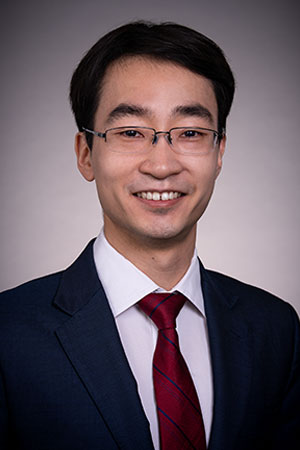
Zhao Ding
研究方向
方向提炼待补(distill 阶段生成)。
近三年论文 · 3 篇 (点击展开摘要,时间倒序)
Query-Centric Diffusion Policy for Generalizable Robotic Assembly
arXiv (Cornell University) · 2025 · cited 0 · doi.org/10.48550/arxiv.2509.18686
The robotic assembly task poses a key challenge in building generalist robots due to the intrinsic complexity of part interactions and the sensitivity to noise perturbations in contact-rich settings. The assembly agent is typically designed in a hierarchical manner: high-level multi-part reasoning and low-level precise control. However, implementing such a hierarchical policy is challenging in practice due to the mismatch between high-level skill queries and low-level execution. To address this, we propose the Query-centric Diffusion Policy (QDP), a hierarchical framework that bridges high-level planning and low-level control by utilizing queries comprising objects, contact points, and skill information. QDP introduces a query-centric mechanism that identifies task-relevant components and uses them to guide low-level policies, leveraging point cloud observations to improve the policy's robustness. We conduct comprehensive experiments on the FurnitureBench in both simulation and real-world settings, demonstrating improved performance in skill precision and long-horizon success rate. In the challenging insertion and screwing tasks, QDP improves the skill-wise success rate by over 50% compared to baselines without structured queries.
DiffScene: Diffusion-Based Safety-Critical Scenario Generation for Autonomous Vehicles
Proceedings of the AAAI Conference on Artificial Intelligence · 2025 · cited 28 · doi.org/10.1609/aaai.v39i8.32951
The field of Autonomous Driving (AD) has witnessed significant progress in recent years. Among the various challenges faced, the safety evaluation of autonomous vehicles (AVs) stands out as a critical concern. Traditional evaluation methods are both costly and inefficient, often requiring extensive driving mileage in order to encounter rare safety-critical scenarios, which are distributed on the long tail of the complex real-world driving landscape. In this paper, we propose a unified approach, Diffusion-Based Safety-Critical Scenario Generation (DiffScene), to generate high-quality safety-critical scenarios which are both realistic and safety-critical for efficient AV evaluation. In particular, we propose a diffusion-based generation framework, leveraging the power of approximating the distribution of low-density spaces for diffusion models. We design several adversarial optimization objectives to guide the diffusion generation under predefined adversarial budgets. These objectives, such as safety-based objective, functionality-based objective, and constraint-based objective, ensure the generation of safety-critical scenarios while adhering to specific constraints. Extensive experimentation has been conducted to validate the efficacy of our approach. Compared with 6 SOTA baselines, DiffScene generates scenarios that are (1) more safety-critical under 3 metrics, (2) more realistic under 5 distance functions, and (3) more transferable to different AV algorithms. In addition, we demonstrate that training AV algorithms with scenarios generated by DiffScene leads to significantly higher performance in terms of the safety-critical metrics compared to baselines. These findings highlight the potential of DiffScene in addressing the challenges of AV safety evaluation, paving the way for safer AV development.
Towards Guaranteed Safe AI: A Framework for Ensuring Robust and Reliable AI Systems
arXiv (Cornell University) · 2024 · cited 12 · doi.org/10.48550/arxiv.2405.06624
Ensuring that AI systems reliably and robustly avoid harmful or dangerous behaviours is a crucial challenge, especially for AI systems with a high degree of autonomy and general intelligence, or systems used in safety-critical contexts. In this paper, we will introduce and define a family of approaches to AI safety, which we will refer to as guaranteed safe (GS) AI. The core feature of these approaches is that they aim to produce AI systems which are equipped with high-assurance quantitative safety guarantees. This is achieved by the interplay of three core components: a world model (which provides a mathematical description of how the AI system affects the outside world), a safety specification (which is a mathematical description of what effects are acceptable), and a verifier (which provides an auditable proof certificate that the AI satisfies the safety specification relative to the world model). We outline a number of approaches for creating each of these three core components, describe the main technical challenges, and suggest a number of potential solutions to them. We also argue for the necessity of this approach to AI safety, and for the inadequacy of the main alternative approaches.